
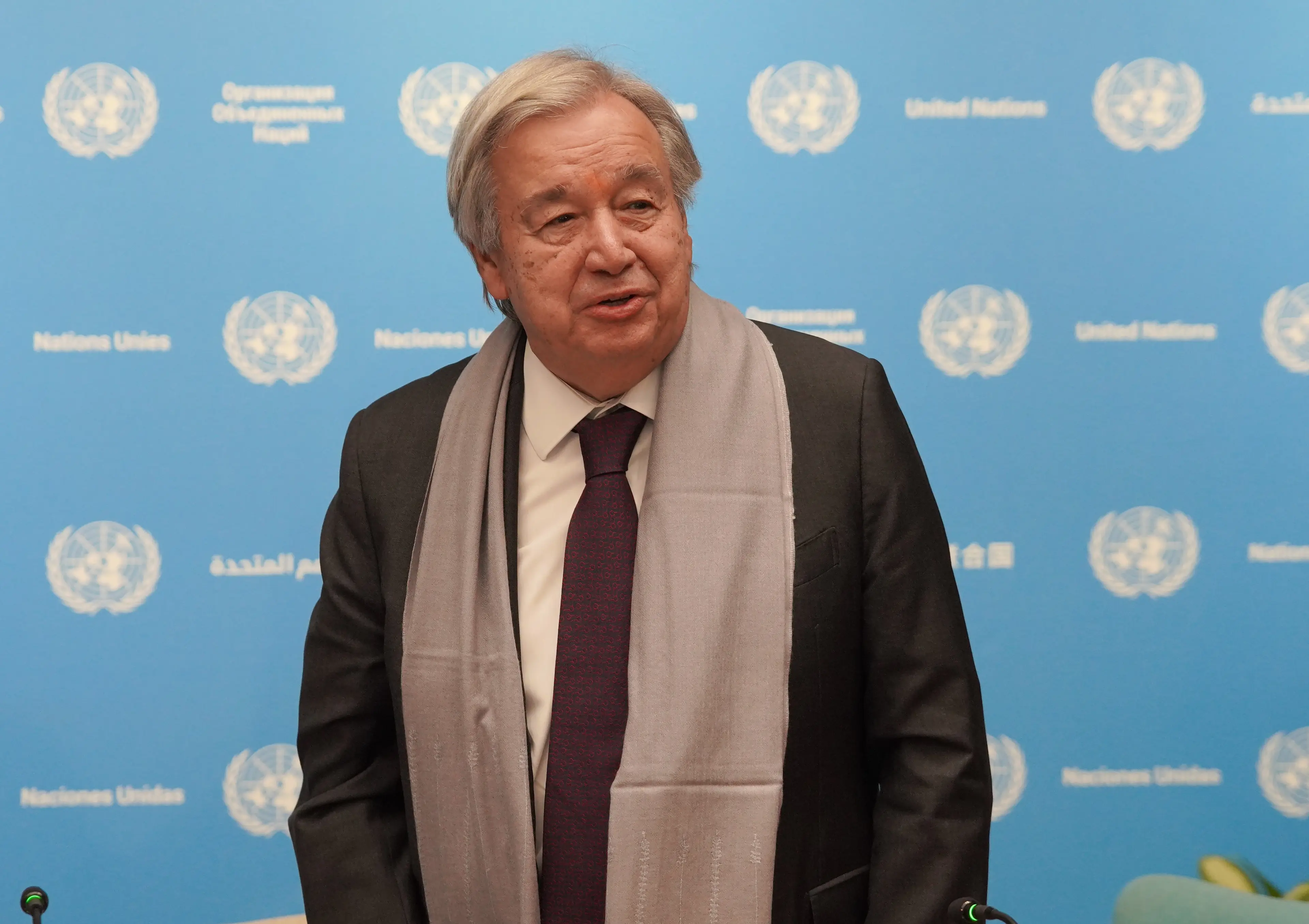








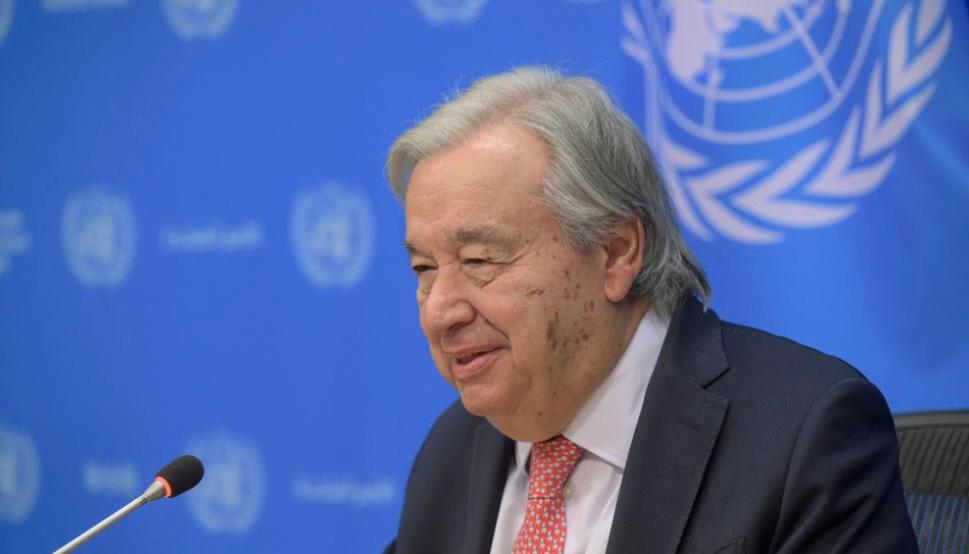
United Nations, Sep 17 (IANS) UN Secretary-General Antonio Guterres called for de-escalation in the Middle East and Ukraine.
He made the appeal at a press conference ahead of this year's high-level week of the UN General Assembly.
"At this crucial moment in the Middle East, de-escalation must be priority one, priority two and priority three," said Guterres on Wednesday (local time). "All parties must cease any actions that harm civilians and ensure that humanitarian operations can proceed safely and without obstruction."
Navigational rights and freedoms in and around the straits of Hormuz and Bab al-Mandab must be fully restored and respected by all, in accordance with international law, he added.
"The only path forward is de-escalation, diplomacy and dialogue. I will continue to press this message in my ongoing contacts with leaders," he said.
On the Ukraine conflict, he said that it is time for an immediate ceasefire as a first step toward a just, lasting and comprehensive peace, in line with the UN Charter, international law and relevant UN resolutions, reports Xinhua news agency.
The conflict is in its fifth year, with immense civilian suffering, cascading global consequences, and no end in sight, he noted.
Regarding the peace plan for Gaza, he said it must be fully implemented with unrestricted humanitarian aid. And the creeping annexation of the West Bank must stop, said Guterres. "There will be no peace in the Middle East without realising the two-state solution."
Meanwhile, Russian Foreign Minister Sergei Lavrov said that Russia would consider the deployment of Western troops on Ukrainian territory a declaration of direct war.
"Let me emphasise that we have no interest in getting involved in this, but if Europe, which talks every day about preparing for war against Russia, attacks the Russian Federation, that will be a completely different war, and it will be very short," he said at the International Festival of Youth in Yekaterinburg on Wednesday.
Lavrov added that Moscow remains ready for a diplomatic settlement, including in the trilateral format that the United States proposed again. He noted, however, that Russia's position on a settlement to the conflict still implies fulfilling the objectives set at the outset and eliminating the root causes.
"Therefore, for us, addressing the root causes of threats and protecting the rights of Russian people, their right to their native language and Orthodox faith, are absolutely clear and well-defined objectives of the special military operation," he noted.
"I am confident that achieving these goals, as formulated by President Vladimir Putin, will help not only resolve this crisis but also improve the situation across the entire Eurasian continent, primarily in its western, European part and beyond. This will contribute to the establishment of a world order rooted in a balance of interests and international rules," Lavrov added.
--IANS
sd/