
















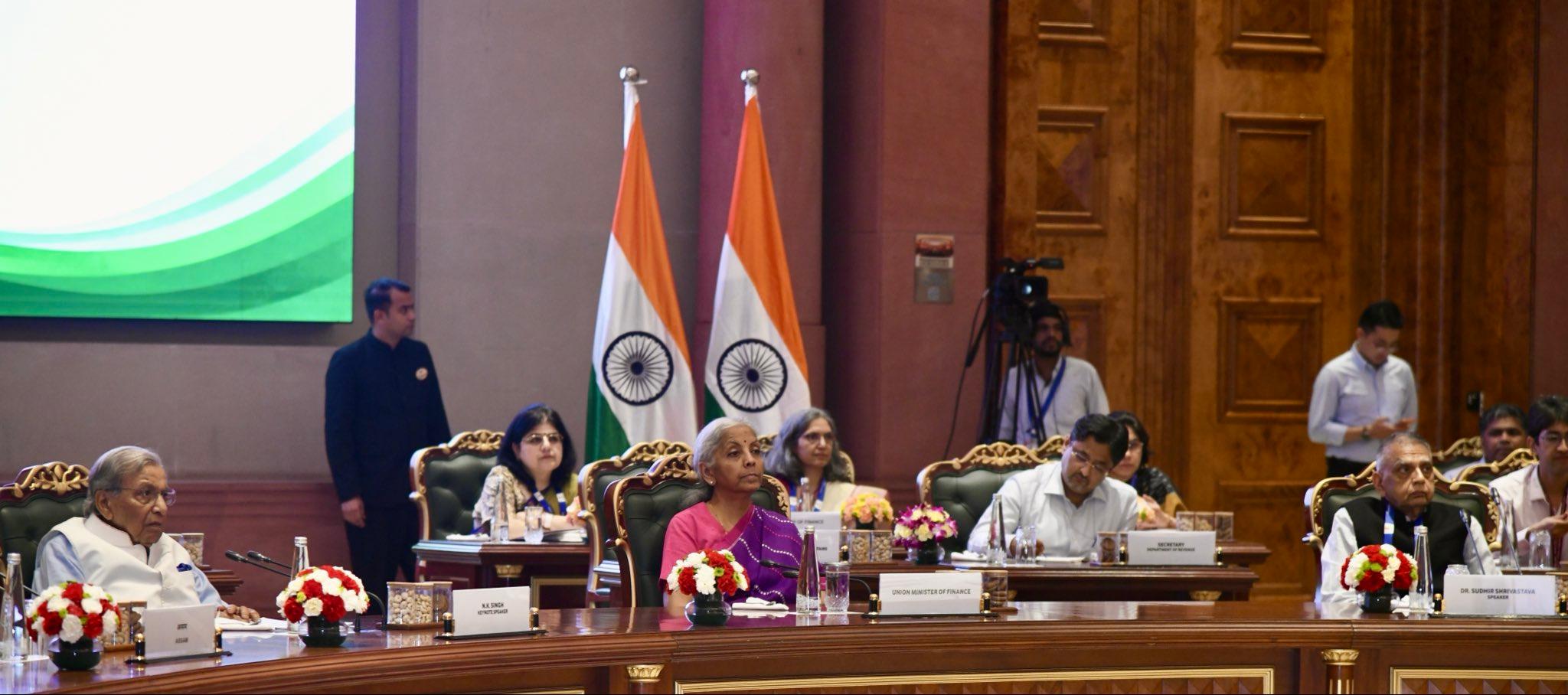
New Delhi, Sep 20 (IANS) India’s gross domestic savings rate, currently around 34 per cent of GDP, needs to rise towards 38-40 per cent to sustain the 7-8 per cent growth required for Viksit Bharat, according to NK Singh, Chairman of the 15th Finance Commission.
Singh advocated state-wise debt sustainability assessments, and stressed greater fiscal transparency, including accounting for off-budget borrowings, guarantees, arrears and borrowings through state-owned entities.
Addressing the conference on ‘Financing India’s Journey towards Viksit Bharat’ here, Singh observed that the larger opportunity lies in leveraging information rather than merely increasing tax rates.
“AI and machine learning, combined with existing tax databases, can help identify compliance gaps, broaden the effective tax base and improve revenue mobilisation,” he told state finance ministers and finance secretaries.
Singh stressed the need to move from public finance to private capital, with public resources playing a catalytic role.
He also emphasised predictable rules, enforceable contracts, faster dispute resolution and stronger investment treaties to facilitate domestic and foreign investment.
On factor-market reforms, Singh identified capital, labour and land as critical areas, touched upon our relatively higher cost of capital, emphasised labour productivity through skilling, apprenticeships and stronger university-industry linkages, and urged States to improve land-use efficiency, streamline approvals and strengthen digital land records.
Dr V Anantha Nageswaran, Chief Economic Adviser, observed that the conference had provided a valuable opportunity for the Union and States to move beyond discussions on resource generation and sharing, and deliberate collectively on financing India’s development over the next two decades.
The CEA noted that the quality of discussions and the openness with which States shared their perspectives had strongly established the case for holding the conference annually.
He emphasised that while India’s savings base was substantial and would need to grow further, significantly greater participation by private capital would be essential to mobilise the investment required for Viksit Bharat.
Nageswaran outlined three priorities for states: creating an enabling environment for private investment through the availability of land, power and logistics, supported by effective single-window clearances; improving the quality of investment through robust project-preparation pipelines and credible project reports to facilitate access to domestic and multilateral finance, alongside directing credit towards underserved districts with growth potential; and strengthening states’ own capital expenditure despite fiscal constraints.
—IANS
na/