
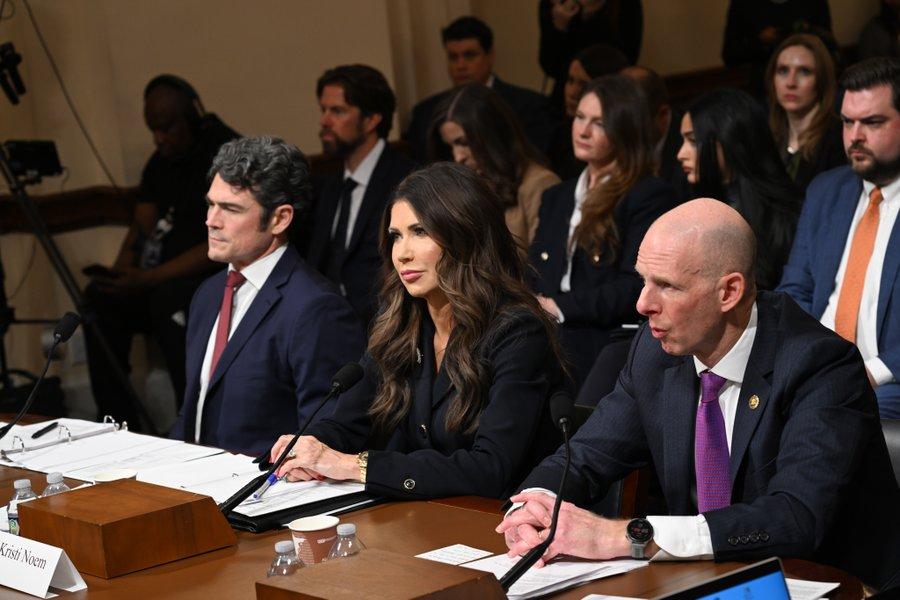
Washington, Dec 17 (IANS) Senior US national security officials have told lawmakers that terrorist groups with roots in South Asia — particularly Pakistan- and Afghanistan-linked networks — continue to pose a direct and evolving threat to the United States.
National Counterterrorism Centre Director Joseph Kent told members of the House Homeland Security Committee during a Congressional hearing on worldwide dangers that ISIS and al-Qaida remain active across South and Central Asia, with Afghanistan again emerging as a permissive environment for extremist activity.
“ISIS and al-Qaida have found sanctuary in places like Afghanistan,” Kent said, citing the “transitional nature of those governments” and warning that the region continues to generate threats that reach far beyond its borders.
Kent said US intelligence assessments show that terror groups with historical links to Pakistan and Afghanistan are increasingly relying on online propaganda, encrypted communications and ideological messaging to inspire violence abroad, including inside the United States.
“The new terrorist tactic that we’re seeing more and more is moving away from very deliberate cellular attacks… into an inspirational methodology,” Kent said, describing how individuals radicalised by overseas groups act independently without direct operational command.
FBI National Security Branch Operations Director Michael Glasheen reinforced that warning, saying international terrorist organisations tied to ISIS and al-Qaida remain among the most immediate threats to the US homeland, even when attacks are carried out by lone actors.
“Some international terrorists are people located and radicalized to violence primarily inside the United States,” Glasheen said, adding that such individuals are “inspired to commit violence by foreign terrorist organizations such as ISIS and al-Qaida.”
Kent also linked South Asia–origin threats to post-Afghanistan evacuation vetting failures, saying US agencies had identified individuals admitted under emergency programs who later showed ties to terrorist organisations.
“These are individuals who under normal circumstances would never be allowed to enter our country because of their ties to jihadi groups like ISIS and al-Qaida,” he said.
The South Asia warnings came early in a hearing that later spiralled into sharp political confrontations, including a tense exchange between Indian American Congressman Shri Thanedar and Homeland Security Secretary Kristi Noem.
Thanedar accused Noem of misleading Congress on immigration enforcement and court compliance. “Secretary Noem, you lied to me under oath that day,” he said, pressing her on claims that US citizens had not been detained by immigration agents.
Noem denied the charge, saying, “The Department of Homeland Security and this administration complies with all federal court orders. We always have and we always will.” She added that DHS had “never once detained — or deported — an American citizen,” saying individuals may be briefly held until their identity is verified.
The exchange grew increasingly heated, with Thanedar saying, “I am sick of your lies. The American people demand truth,” and asking whether Noem would resign if not fired. Noem responded sharply: “I will consider your asking me to resign as an endorsement of my work.”
The committee was created after the September 11, 2001, attacks, which killed nearly 3,000 people. US officials continue to warn that instability in South Asia — particularly Afghanistan and Pakistan-linked terror networks — remains closely tied to global and homeland security risks, even as the nature of terrorism continues to evolve.
--IANS
lkj/rs