











Washington, Sep 18 (IANS) India’s Ambassador to the United States, Vinay Kwatra, has recalled how three months under the mentorship of Microsoft chief Satya Nadella’s father taught him a lasting lesson in leadership: discipline stays with people when they accept it, rather than have it imposed on them.
Speaking at a gathering of Indian American technology leaders in Seattle, Kwatra turned from artificial intelligence and development to his experience as a young civil servant.
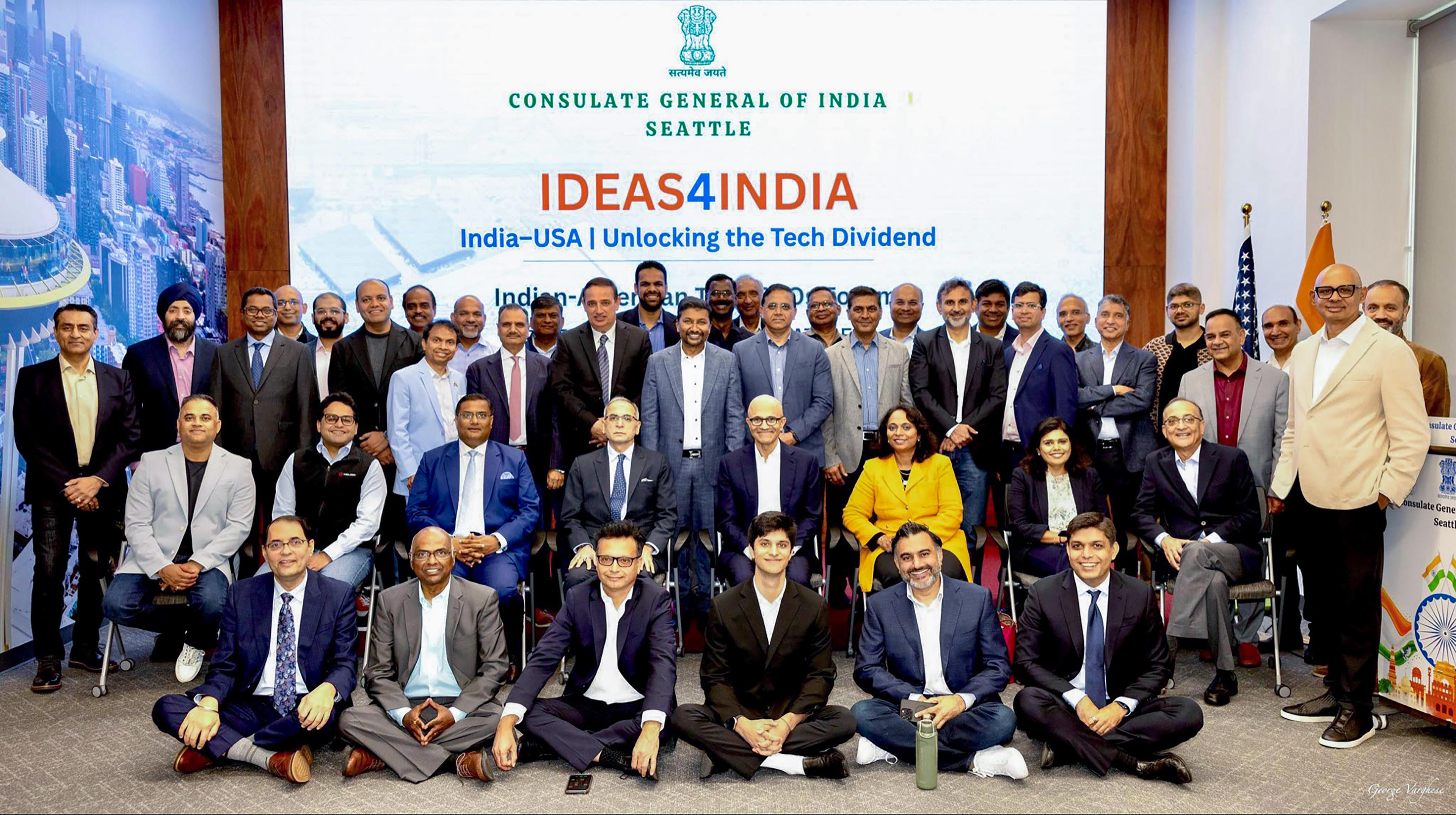
Nadella was present as the guest of honour at the September 17 Ideas4India forum, organised by the Consulate General of India.
Kwatra said a photograph shown during the gathering had prompted him to remember his time under the elder Nadella’s guidance. He recalled being part of a group of about 260 young trainees, each inclined to head in a different direction.
Disciplining people in their early 20s was difficult, he said. Their natural tendency was often to challenge what stood before them.
“So discipline can either be enforced or it can be integrated in you,” Kwatra said. “The only way in which it can be integrated in you is when you accept it, not when it is forced upon you.”
That, he recalled, was the distinction Nadella’s father understood.
His approach encouraged the trainees to accept discipline and make it part of their character. For Kwatra, the influence endured well beyond those three months of training.
“And I think if you talk of leadership, in my personal opinion, the best leadership is which builds the strength of your character,” he said.
The recollection followed an introduction in which the host described messages from civil servants who remembered Nadella’s father as a humble, humane and affectionate mentor. They had asked that their appreciation be conveyed when they learnt his son would attend the gathering.
Nadella also drew on his father’s influence, recalling an interest in development economics and the question of how technological progress could bring prosperity to more countries.
His father, he said, repeatedly returned to the benefits that technological revolutions had produced and why more countries had not completed the journey to becoming developed economies.
That question remained relevant to how Nadella viewed artificial intelligence. He described the ambition of a technology whose benefits could spread widely enough to help every country advance.
The personal recollections accompanied a discussion about what technology leaders owed the communities that had shaped them.
Nadella spoke warmly of Seattle, where he said he had spent 35 years, and of the Indian diaspora’s role in strengthening the city’s relationship with India. He described a local culture in which people wore success lightly and placed value on doing more and talking less.
Kwatra, in turn, told the executives that their achievements contributed to India’s development and standing. The connection might not always be tangible, he said, but it was real.
Ideas4India brought together more than 40 Indian-origin chief executives and chief technology officers from fields including AI, semiconductors, quantum computing, aerospace and enterprise software. Organised as a follow-up to the India AI Impact Summit 2026, the gathering sought their ideas for strengthening technology cooperation between India and the United States.
--IANS
lkj/rs