
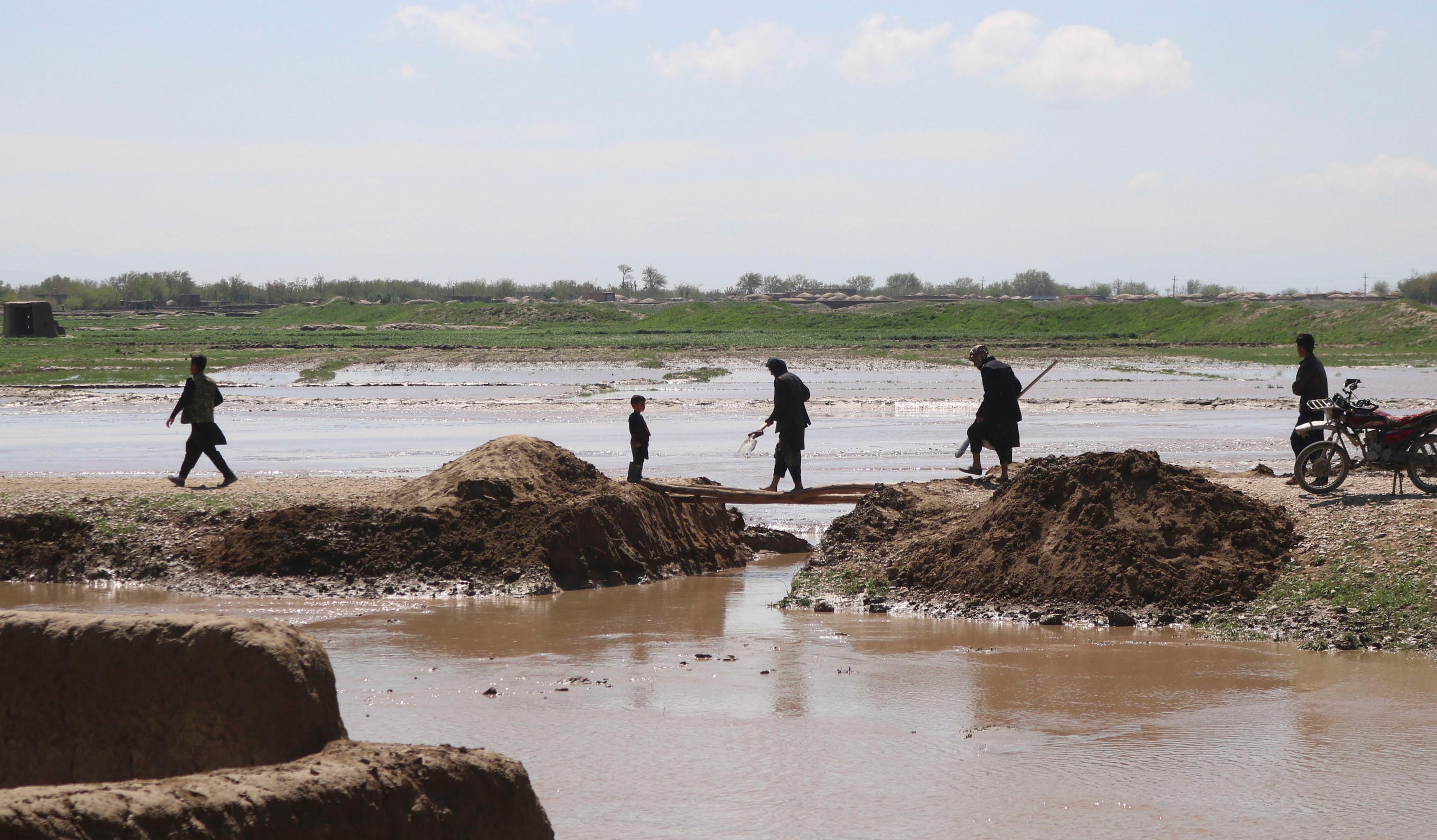
Kabul, Jan 1 (IANS) At least 12 people were killed and 11 others injured after heavy rainfall and snowfall triggered severe flash floods across multiple provinces in Afghanistan over the past three days, a spokesman for the National Disaster Management Authority said on Thursday.
Hafiz Mohammad Yusuf Hammad, spokesman for the authority, said the disaster struck Kapisa, Parwan, Daykundi, Uruzgan, Kandahar, Helmand, Badghis, Faryab, Badakhshan, Herat and Farah provinces.
The mishap also caused extensive property damage, destroying or partially damaging 1,859 homes and washing away 209 km of rural roads, Hammad added, Xinhua news agency reported.
Additionally, approximately 1,200 livestock perished, and 13,941 acres of agricultural land were swamped or destroyed.
Rescue and relief teams have been dispatched to the affected areas to assist victims, and the distribution of emergency aid is underway as damage assessments continue, Hammad said.
On Tuesday, the UN Office for the Coordination of Humanitarian Affairs (OCHA) launched a 1.71 billion US dollar humanitarian needs and response plan for Afghanistan in 2026, which is expected to remain one of the world's largest humanitarian crisis this year.
In 2026, an estimated 21.9 million people will require humanitarian assistance, a four per cent decrease from 2025, and 17.4 million people are projected to face acute food insecurity, including 4.7 million in IPC Phase 4 (Emergency), according to OCHA.
The office said that UN humanitarian partners will prioritize 17.5 million people for assistance in 2026, around 80 per cent of those in need, through a coordinated response costing 1.71 billion dollars. Assistance will focus on life-saving and protective interventions, including food, shelter, healthcare, nutrition, safe water, hygiene and multipurpose cash support.
With needs remaining among the highest globally in a non-conflict setting, humanitarian conditions in Afghanistan continue to be driven by deep structural vulnerability, worsening food insecurity, and recurrent shocks, including climate-driven drought, large-scale returnee inflows, frequent earthquakes and floods, multiple disease outbreaks, and severe protection risks, especially for women and girls, the office said.
Mass cross-border returns further compound needs: more than 2.61 million Afghans returned from Iran and Pakistan in 2025 alone, placing significant pressure on host communities, basic services and livelihoods, OCHA said.
--IANS
/as