
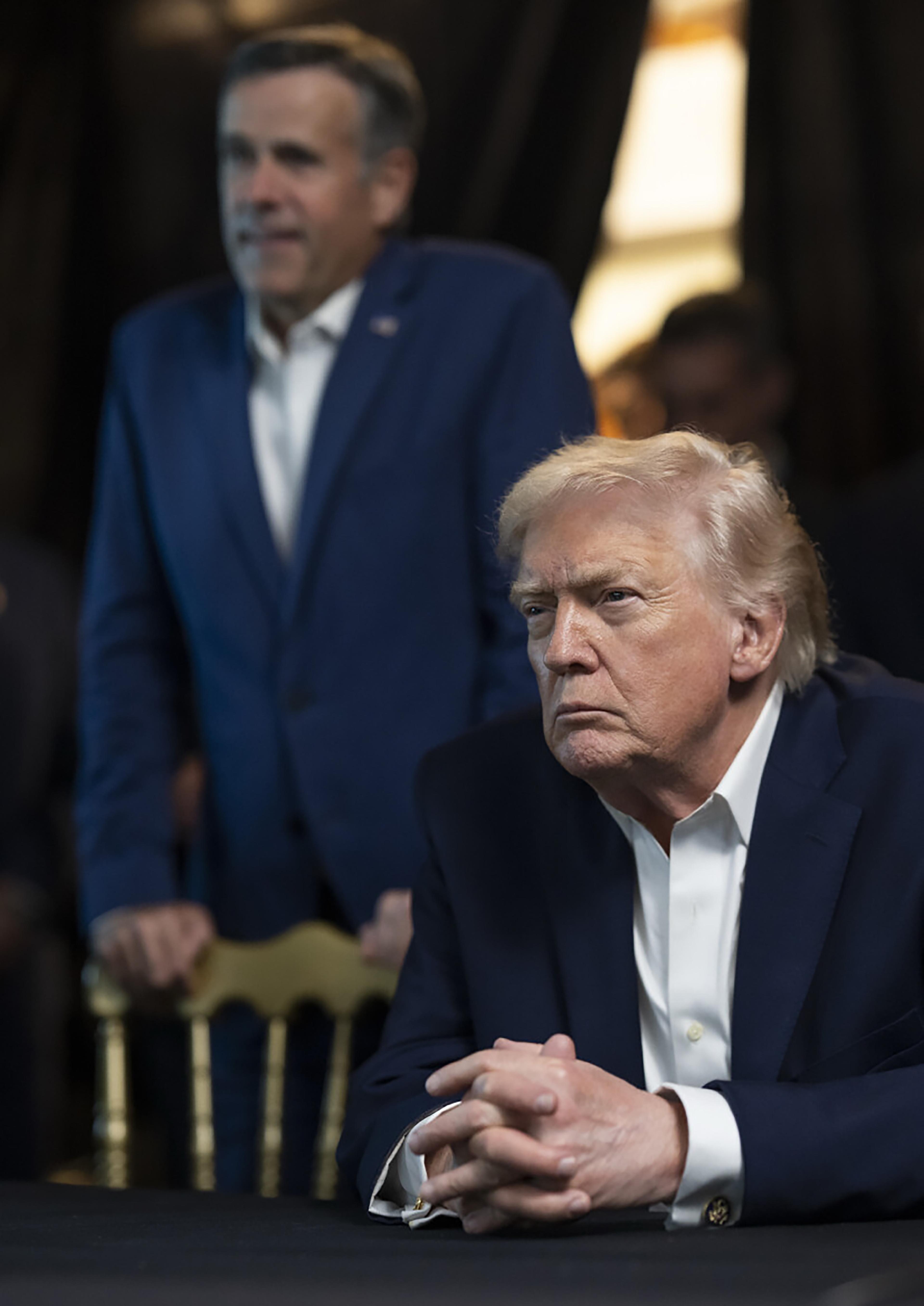
New Delhi, Jan 5 (IANS) Since the successful operation in Venezuela that led to its leader Nicolas Maduro’s detention, US President Donald Trump is exuberating in confidence, reiterating establishing “American dominance in the Western hemisphere” which will “never be questioned again”.
Over the weekend in the US, reports quote him having issued warnings to countries including Colombia, Cuba, Mexico, Iran and Greenland.
Incidentally, Greenland is a self-governing territory of Denmark, which is an US ally and a NATO member. On Iran, India on Monday advised its nationals to avoid non-essential travel, owing to the protests or demonstrations.
It is about protestors against the current regime in Tehran that Washington has issued warnings of punitive action if any strong action is initiated by Iran.
Meanwhile, Trump appears to be eyeing countries “that are viable and successful and where the oil is allowed to freely come out”, as he stated Sunday.
While the Caracas raid is being framed as strike against drug trafficking and narco-terrorism, his threats to other nations over the weekend has reignited debates over sovereignty, regional stability, and Washington's role in Latin America.
The episode has been attributed by several reports to the December-released US National Security Strategy (NSS), which emphasises competition with revisionist powers and protection of American economic and security interests, and the historical rubric of the Monroe Doctrine.
The NSS set to rediscover the more than 200-year-old foreign policy statement known as the Monroe Doctrine, drafted against European colonialism in the Western Hemisphere.
It was created in 1823 by President James Monroe as part of foreign policy against colonialism by countries in the Western Hemisphere.
It viewed any intervention by foreign powers in the political affairs of the Americas as a hostile act against the United States.
“After years of neglect, the United States will reassert and enforce the Monroe Doctrine to restore American preeminence in the Western Hemisphere, and to protect our homeland and our access to key geographies throughout the region. We will deny non-Hemispheric competitors the ability to position forces or other threatening capabilities, or to own or control strategically vital assets, in our Hemisphere,” observed the NSS, adding, “This ‘Trump Corollary’ to the Monroe Doctrine is a common-sense and potent restoration of American power and priorities, consistent with American security interests.”
This “Trump Corollary” reference was termed in several reports, including ‘The Economist’ magazine as “Donroe Doctrine”.
The document, according to The Economist, is “further reason for America's friends to plan for the worst”.
The NSS frames competition with revisionist powers as a global contest for influence. In Latin America, the United States has long viewed Russian, Chinese, and Iranian outreach as a challenge to its traditional sphere.
The Maduro operation -- and the public warnings to states with ties to Caracas -- signal an intent to roll back or punish external influence that undermines US preferences for regional alignment.
What is new is the doctrine’s adaptation to a multipolar era. Rather than merely opposing European colonialism, modern US policy frames the hemisphere as a zone where great‑power competition must be constrained.
Saturday’s raid and Trump’s naming of other countries echo a Monroe‑style insistence on hemispheric primacy, but they also reflect a 21st‑century twist: the doctrine is being operationalised not only through diplomacy and economic pressure but through targeted military actions and public coercive signaling designed to shape the behavior of both state and non‑state actors.
President Trump’s public comments explicitly referenced oil and strategic geography when discussing Greenland and other territories, tying resource access and supply‑chain considerations to national security.
That linkage reflects an NSS concern that economic dependencies and resource access can translate into strategic vulnerabilities.
--IANS
jb/pgh