
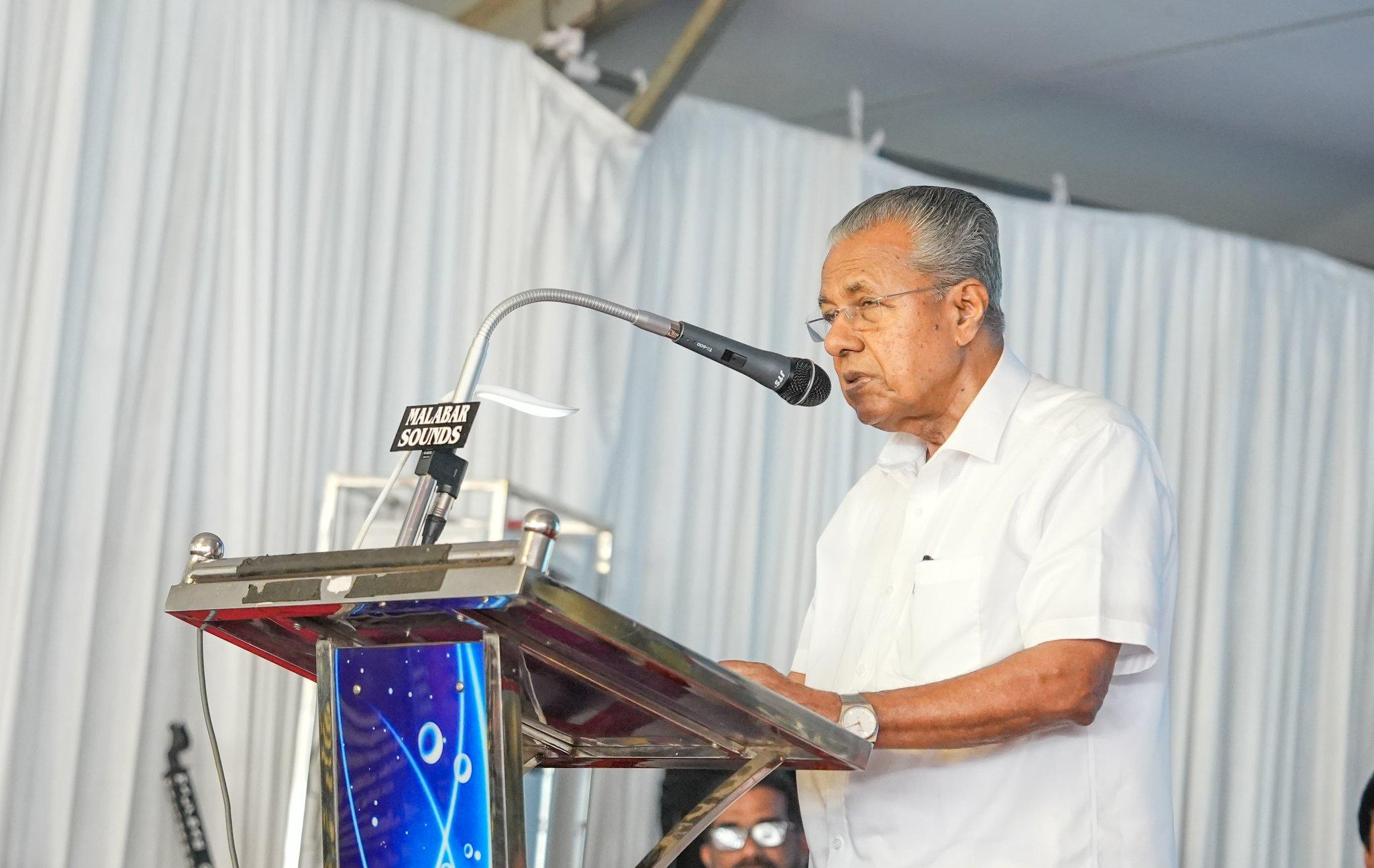
Thiruvananthapuram, March 17 (IANS) As Kerala heads towards a crucial Assembly election with just weeks to go, Chief Minister Pinarayi Vijayan’s bid for a historic third consecutive term appears increasingly uncertain, with challenges mounting from within the Communist Party of India (Marxist) itself.
Known for its organisational discipline and ability to contain dissent swiftly, the CPI(M) is today grappling with an unusual and widening rebellion across key strongholds. This, combined with a visible anti-incumbency sentiment after two consecutive terms in power, has significantly altered the electoral landscape.
What stands out this time is that the rebellion has surfaced in districts long considered the party’s impregnable bastions -- Kannur, Alappuzha and Palakkad. In Alappuzha, two-time former minister G. Sudhakaran has already broken ranks and hit the campaign trail as an Independent, signalling deep-rooted discontent among senior leaders.
The situation is even more striking in Kannur, the ideological nerve centre of the CPI(M). In a rare show of defiance, two influential leaders have announced their decision to contest as Independents. V. Kunjikrishnan is set to contest from Payyannur, while veteran leader T. K. Govindan will take on the party from neighbouring Taliparamba.
Such open dissent in Kannur, arguably the party’s strongest district, is unprecedented and points to deeper organisational fissures.
In Palakkad, the crisis has taken another dimension. Former legislator P.K. Sasi has severed ties with the party and is now leading a group of local leaders, weakening the party’s grassroots cohesion.
Adding to the party’s discomfort is the expected defection of A. Suresh, a close aide of veteran Communist leader V. S. Achuthanandan, who is set to join the Congress and contest from Malampuzha, a seat closely associated with Achuthanandan. Compounding the problem is a notable shift in the party’s candidate selection approach.
Unlike in previous elections, the CPI(M) has retained several veterans who have already completed two and in some cases even three terms in office. This has left many aspiring youth leaders and emerging faces, who were expecting an entry into electoral politics, disappointed and sidelined, further fuelling internal resentment. The timing of these developments makes the situation particularly precarious.
With barely 24 days left for polling, the party has limited room to contain the damage or recalibrate its strategy. Unlike in the past, when dissent was either swiftly managed or remained localised, the current wave of rebellion is geographically spread and politically significant.
Overlaying this internal churn is the broader factor of anti-incumbency.
After two consecutive terms, an exception in Kerala’s political cycle, signs of voter fatigue, governance concerns and perceptions of centralised decision making are becoming more pronounced.
The CPI(M) leadership, however, is banking on the disarray within the opposition to weather the storm. With the Congress yet to finalise its candidate list and murmurs of dissent surfacing within its ranks, the ruling party hopes to turn the situation to its advantage.
However, senior Congress leader and candidate K. Muraleedharan dismissed concerns over delays in candidate selection as routine. “In the 2001 elections, it took us nearly two weeks to finalise our list. When votes were counted, we registered a historic victory, and A. K. Antony was sworn in. In the Congress, such delays are natural,” he said.
Taken together, these factors present a formidable challenge for Vijayan and the CPI(M).
While the party continues to retain a strong organisational base and a committed support base, the convergence of anti-incumbency, internal rebellion in core strongholds, and dissatisfaction among aspiring leaders could make the quest for a third straight term considerably more difficult than in the past.
--IANS
sg/skp