
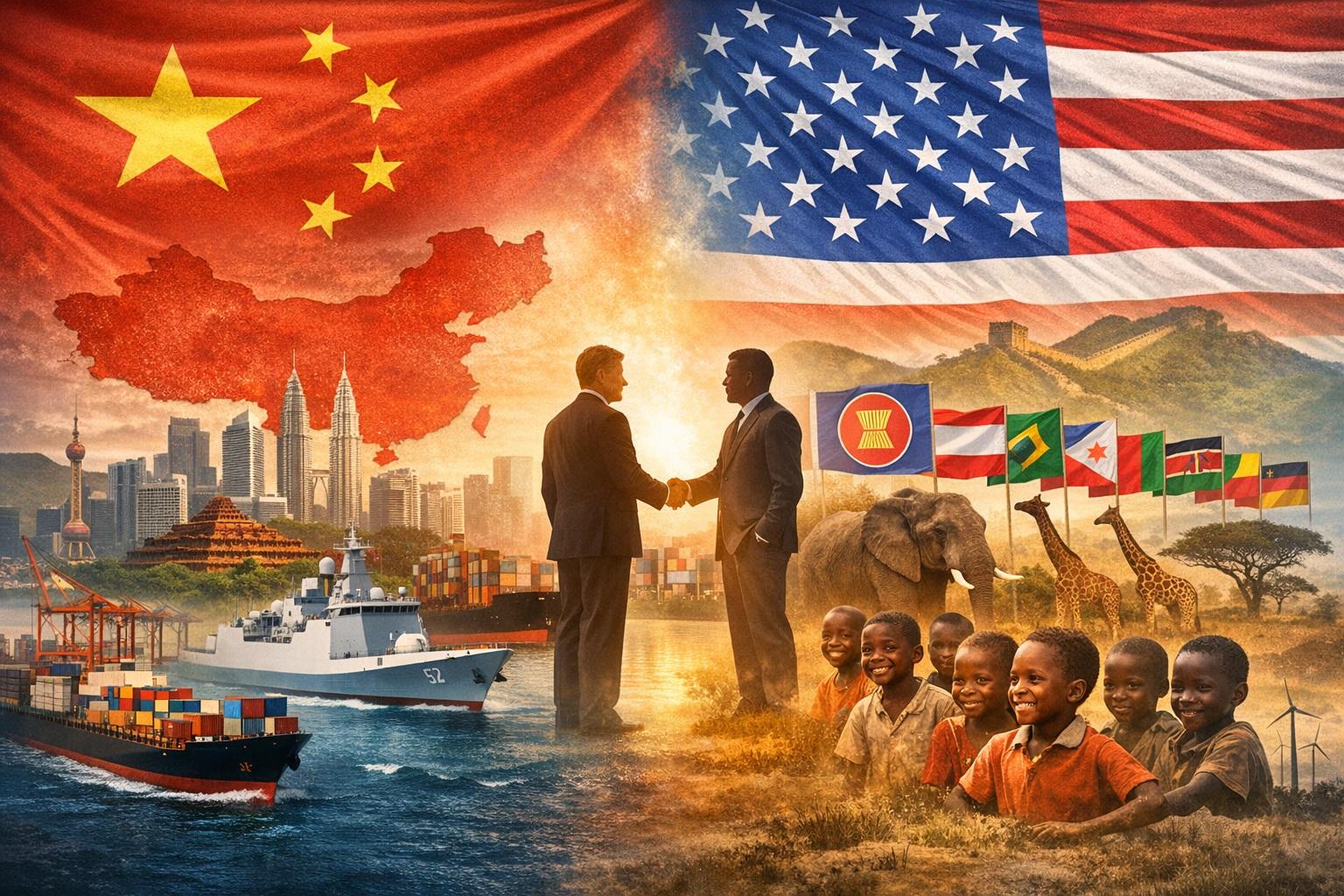
Washington, March 27 (IANS) Confronting China’s growing economic and diplomatic influence, US nominees told senators that Southeast Asia and Africa will be central to Washington’s strategy in shaping the next phase of global competition.
At a Senate Foreign Affairs Committee confirmation hearing on Thursday, nominees for top diplomatic positions outlined priorities spanning the Association of Southeast Asian Nations, the African Development Bank, and global education and cultural outreach, underscoring a broader push to reinforce American influence.
Kevin Kim, nominated as US ambassador to ASEAN, described Southeast Asia as a strategic crossroads for global commerce and security. “South-East Asia straddles the sea lanes through which a third of global shipping passes every year,” he said, adding that the United States must ensure the Indo-Pacific remains “free and open.”
Kim emphasised that ASEAN economies, with a combined GDP of $4 trillion, represent a major export market for American goods. He said his priority would be to ensure the United States remains “the partner of choice” for ASEAN nations while expanding trade access, strengthening supply chains and shaping regional rules.
Kim argued that the United States retains structural advantages, including its position as a leading provider of foreign direct investment.
“We still remain the largest provider of FDI into Southeast Asia,” he said, noting that this allows Washington to help shape the region’s economic norms.
In Africa, Ademola Adewale-Sadik, nominated as US executive director at the African Development Bank, said Washington must better leverage its role as a major shareholder to advance both economic and strategic interests.
“We are the second largest shareholder… and that has to mean something,” he said, calling for reforms that would expand opportunities for American companies in development projects.
He described Africa as a long-term strategic frontier. “Africa’s development is the single greatest expansion opportunity for global GDP,” he said, arguing that stronger US engagement could deliver benefits for both American and African economies.
Adewale-Sadik also addressed competition with China, which has secured a significant share of infrastructure and development contracts across the continent. He said US firms offer higher long-term value, even if they do not always compete on price.
“Our private sector may not always win on price, but we will always win on value,” he told senators.
Catherine Dillon, nominated as Assistant Secretary of State for Educational and Cultural Affairs, focused on the role of soft power in US foreign policy.
She described exchange programmes as “strategic assets” and “instruments of national power,” particularly in an era of intensifying competition. Programmes such as Fulbright, she said, help “tie people and cultures together” and strengthen US global influence.
Dillon pledged to align such initiatives more closely with national priorities while ensuring fiscal discipline and measurable outcomes.
Lawmakers, however, pressed nominees on concerns ranging from China’s economic leverage to gaps in US diplomatic presence and questions over the management of exchange programmes. Several senators emphasised that sustained engagement — economic, diplomatic and cultural — would be critical for maintaining US influence.
--IANS
lkj/dan