
Washington, Dec 17 (IANS) Russia and China are waging an expanding campaign of “hybrid warfare” across Europe that threatens United States' interests, NATO unity and democratic institutions, US lawmakers and experts have said, noting a dangerous coordinated strategy that blends cyberattacks, sabotage, disinformation and economic coercion.
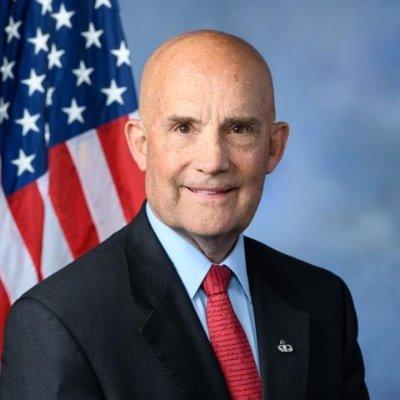
House Homeland Security Committee Chair Keith Self said during a Congressional hearing that the United States and its allies were facing a new era of conflict.
“We are at war, not declared in the traditional sense,” he said, adding that “hybrid warfare is in full effect” as malign actors undermine societies without crossing the threshold of conventional war.
Self said Russia and China were using “diplomatic, information, military and economic means to intimidate, harass and sabotage NATO member states, institutions and societies,” noting that such efforts had intensified since Russia’s full-scale invasion of Ukraine in 2022.
Witnesses detailed a broad spectrum of threats. These included drone incursions into European airspace, sabotage of railways and undersea cables, cyberattacks on critical infrastructure, and the use of migration and disinformation as weapons. “The rules of engagement are changing before our eyes,” Self said.
William Keating, the panel’s ranking Democrat, said Russia and China were “fast friends refining their playbooks to exploit vulnerabilities, manipulate political discourse, and chip away at our shared transatlantic values.” He warned that Beijing and Moscow were pursuing different tactics but shared the same objective of weakening European security.
During the hearing, Craig Singleton of the Foundation for Defense of Democracies said China viewed Europe as “a central arena in its long-term competition with the United States,” using penetration of ports, telecom networks, and supply chains to create “strategic dependencies.”
He said Beijing’s goal was to “fracture alliances and normalize a narrative of Western decline.”
Singleton added that China was acting as “a lifeline for Russia’s war machine,” providing microelectronics and other dual-use goods while Moscow carried out overt aggression and crude disinformation. “Russia and China are running a complementary hybrid playbook,” he said.
Christopher Walker, vice president at the National Endowment for Democracy, described the threat as a “systemic assault on free societies,” saying Russia relied on shadow warfare to destabilize governments without provoking direct military retaliation. “Russia operates in a constant state of confrontation using shadow warfare,” he said.
Laura Cooper, a former Pentagon official, said Europe had experienced “well over 100 acts of sabotage and attempted attacks” linked to Russian hybrid operations since 2022, including damage to railways and cyberattacks combined with physical explosions.
She said Moscow’s immediate aim was “to cut support for Ukraine by creating fear along the NATO alliance.”
Lawmakers also raised concerns about artificial intelligence and social media platforms being exploited to amplify disinformation. Cooper said AI was “bolstering what is already a concerted area of Russian hybrid warfare,” inflaming social tensions and discouraging public support for Ukraine.
Several members criticized what they described as an inadequate US response. Keating warned that failing to confront Moscow and Beijing’s hybrid tactics would make America “less safe, less strong and less prosperous.”
The hearing underscored bipartisan agreement that Europe must invest more in resilience, while also stressing that US leadership remained essential. “Authoritarian powers fear collective response more than anything,” Walker said, urging closer coordination among allies.
Russia’s use of hybrid warfare has expanded sharply since its annexation of Crimea in 2014 and intensified after the 2022 invasion of Ukraine, with NATO repeatedly accusing Moscow of sabotage, cyber operations, and election interference across Europe.
China has denied allegations of cyber espionage and covert influence operations, but Western governments say Beijing increasingly aligns with Moscow on strategic objectives.
--IANS
lkj/rs