
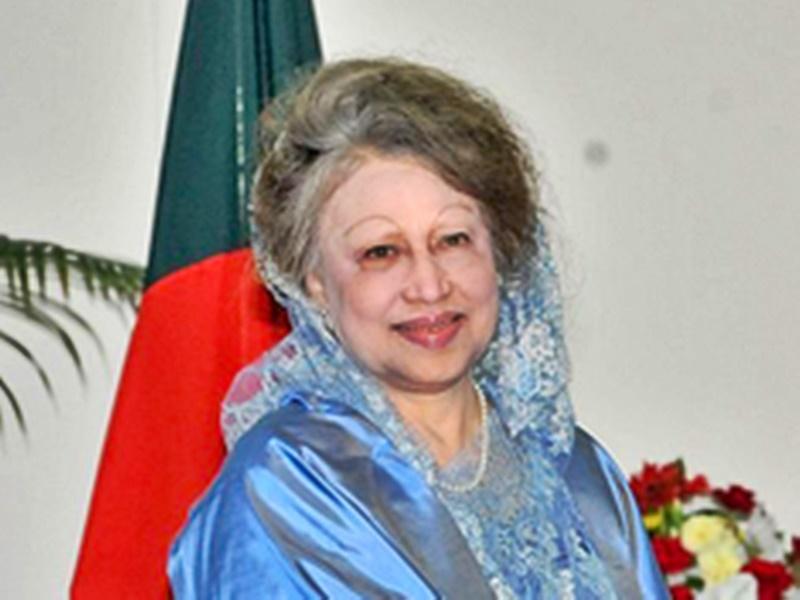
New Delhi, Jan 8 (IANS) Hamtramck city, in the state of Michigan of the United States, has renamed a section of its Carpenter Street to Khaleda Zia Street, in remembrance of the late former prime minister of Bangladesh, who died on December 30 at the age of 80.
The Hamtramck City Council approved the renaming of the stretch between Joseph Campau and Conault Streets. The decision was largely driven by council members of Bangladeshi origin who advocated for the change as a tribute to Khaleda Zia’s political legacy and her significance to the local Bangladeshi community.
The vote reflects the council’s composition and the city’s demographic evolution over recent decades. Hamtramck’s political milestones have drawn national and international attention.
The city made headlines when it elected an all-Muslim city council and Amer Ghalib as mayor. Those developments have at times provoked heated debate about identity, governance and the role of religion in public life, but local officials emphasise that the council’s decisions reflect the will of residents and the realities of a changing electorate, say reports.
For many of these immigrants and their descendants in Hamtramck, the renaming is both symbolic and deeply personal. The city hosts the largest concentration of Bangladeshi residents in Michigan, and the new street name is seen as recognition of a community that has reshaped the city’s social and political landscape.
Local leaders who supported the proposal framed it as an affirmation of the community’s contributions to Hamtramck’s civic life.
Once known as “Little Warsaw” for its Polish-American heritage, Hamtramck has undergone a dramatic demographic shift since the late 20th century. Waves of immigration from Yemen and Bangladesh, among other countries, have transformed the city into the first Muslim-majority municipality in the United States, with nearly 70 per cent of residents identifying as Muslim and more than 40 per cent foreign-born, according to reports quoting recent census figures.
That transformation is visible in its city hall, where apart from the mayor, the police chief and the entire city council are Muslim, and in the multilingual signage that now includes English, Arabic and Bengali.
The renaming has elicited a range of responses. Supporters view it as a rightful acknowledgment of a community’s heritage and a gesture of respect for a leader who remains influential among many Bangladeshis.
According to media reports, local historians and civic leaders point to historical parallels to contextualize the renaming. When Polish immigrants arrived in the early 20th century, they too reshaped Hamtramck’s identity and public spaces; critics at the time voiced concerns similar to those heard today.
Khaleda Zia’s death in late December prompted tributes and debate in Bangladesh and among the diaspora elsewhere. Hamtramck renaming is part of a pattern in which immigrant communities in the United States memorialise leaders and events from their countries of origin, creating civic markers that serve both local and transnational purposes.
--IANS
jb/pgh