
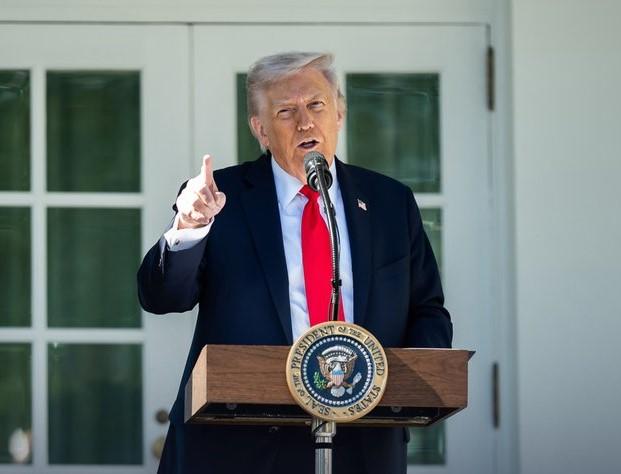
Washington, March 7 (IANS) US President Donald Trump said he is preparing a sweeping executive order within a week to address what he described as a crisis in American college athletics, warning that escalating payments to athletes and legal challenges threaten the financial stability of universities and the future of Olympic sports.
Speaking at a White House roundtable with lawmakers, sports executives, college officials, and coaches, Trump said the current system has become unsustainable and could push universities toward massive financial losses.
“This is a very important meeting… because this is really the future of I think beyond college sports,” Trump said. “This is the future of colleges because we're looking at numbers that are coming in and the amount of money being spent and lost by otherwise very successful schools is astounding.”
Trump said schools are entering what he called a financial arms race driven by payments to athletes and legal uncertainty around eligibility, transfers and name-image-likeness (NIL) compensation rules.
“Educational institutions find themselves in a financial arms race for athletes in sports like football and basketball,” he said. “If Congress does not take action fast, it could destroy college sports and destroy the colleges that play these sports.”
He warned that soaring costs and litigation have left athletic programs vulnerable, citing large losses reported by several universities.
“It was announced at Penn State their athletic division lost $535 million this last year. Florida State… $440 million loss,” Trump said. “Those numbers are nothing compared to what’s going to happen.”
The president said he would draft an executive order after consulting experts in the room, arguing that legislative action may stall in Congress.
“I’ll have an executive order within one week and it’ll be very all encompassing,” Trump said. “We will get sued… and we’ll see how we do in the court system.”
The move would run parallel to efforts in Congress to advance the Score Act, legislation aimed at creating national standards for athlete compensation, transfers and governance.
House Speaker Mike Johnson said lawmakers are close to passing the bill in the House.
“We’re right on the verge of passage in the House, and we now think we have the votes to do that,” Johnson said. “Congress does need to act quickly because it’s getting out of hand.”
Supporters of reform said college sports play a unique role in the US, providing educational opportunities and serving as a pipeline for Olympic athletes.
Secretary of State Marco Rubio told the gathering that college athletics “is really important” because thousands of students gain access to higher education through sports scholarships.
“There are literally thousands and thousands of young Americans who are going to graduate this year with not just degrees but advanced degrees,” Rubio said.
Former Alabama football coach Nick Saban warned that the current system encourages athletes to chase short-term financial gains rather than education.
“People, instead of making decisions about creating value for their future, they were making decisions about how much money they could make,” Saban said.
NCAA President Charlie Baker said the college sports system currently supports more than half a million athletes and provides billions of dollars in scholarships.
Officials also warned that financial pressures could disproportionately harm women’s and Olympic sports programs.
Sarah Hirshland, chief executive of the US Olympic and Paralympic Committee, said the college system has long been the backbone of Team USA’s success.
“Our country has embraced the education-based sport system for more than a century,” she said. “This system is the envy of the world.”
Participants broadly agreed that the current system lacks consistent national rules and that Congress and federal regulators must act to restore order.
“This wild, wild West mentality… is not healthy for the future of college athletics,” House Majority Leader Steve Scalise said.
College athletics have undergone rapid change in recent years after US courts ruled that restrictions on athlete compensation violated antitrust law. The decisions paved the way for athletes to earn money from endorsements and sponsorships under NIL rules.
--IANS
lkj/rs