
Washington, March 22 (IANS) Notwithstanding the significant military damage to Iran's nuclear infrastructure, core risks remain intact, including enriched uranium stockpiles and the country’s ability to rebuild its programme according to the UN nuclear watchdog.
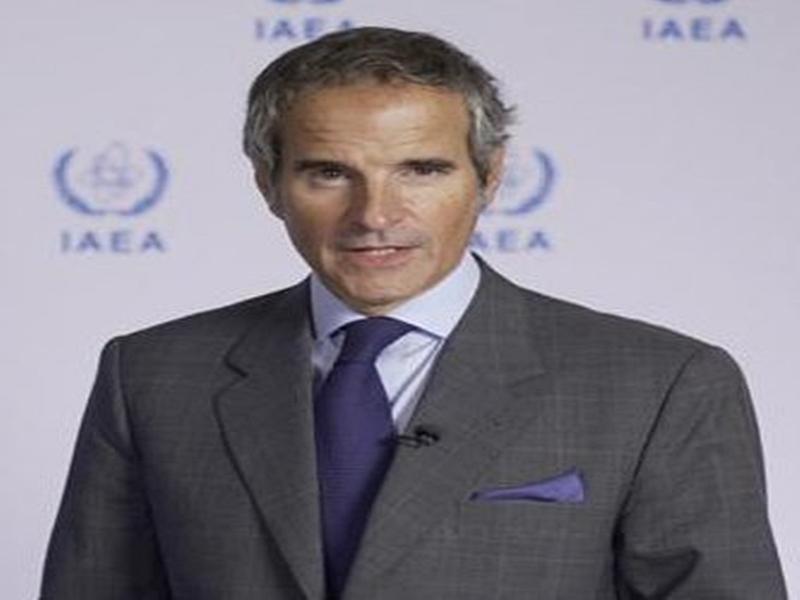
International Atomic Energy Agency (IAEA) Director-General Rafael Grossi told the “Face the Nation with Margaret Brennan" on CBS news in an interview aired Sunday that the ongoing conflict has “rolled back the programme considerably”, but warned that key elements would survive.
“One cannot deny that this has really rolled back the programme considerably,” Grossi said. However, he added that “we will still inherit a number of major issues” after the conflict ends.
Grossi pointed to Iran’s stockpile of uranium enriched to 60 per cent as a major concern. “That is going to still be where it is, largely -- under the rubble,” he said.
He also said some infrastructure and equipment may remain functional. “That is something that we will only be able to ascertain once our inspectors go back,” he added.
The IAEA chief underlined that technical capability cannot be eliminated through military action. “You cannot unlearn what you’ve learned,” he said, noting that Iran retains the industrial and scientific base to rebuild.
He said centrifuge technology, central to uranium enrichment, can be reconstituted. Iran now has “the most sophisticated, fast, and efficient machine that exists, and they know how to make them,” he said.
Grossi stressed that the agency still has unresolved concerns. “There were many unanswered questions, many unanswered questions, many concerning facts,” he said.
He called for renewed inspections and transparency. “If you don’t have anything to hide? Show us,” he said.
On current activity, Grossi said there is no visible rebuilding effort during the conflict. “We don’t see major activity, which is logical, because there is a military campaign ongoing,” he said. But he added that “a lot still has survived”.
He emphasised that diplomacy will be essential going forward. “We need to go back to a negotiating table. It’s going to be needed,” he said.
Grossi also confirmed that diplomatic contacts had taken place before the war, but no agreement was reached. “There was a discussion, but there was no agreement,” he said.
On proposals to remove enriched uranium through military action, Grossi warned of operational challenges. He described the material as “highly contaminated uranium hexafluoride at 60 per cent”, making it “very difficult to handle”.
--IANS
int/lk/pgh