















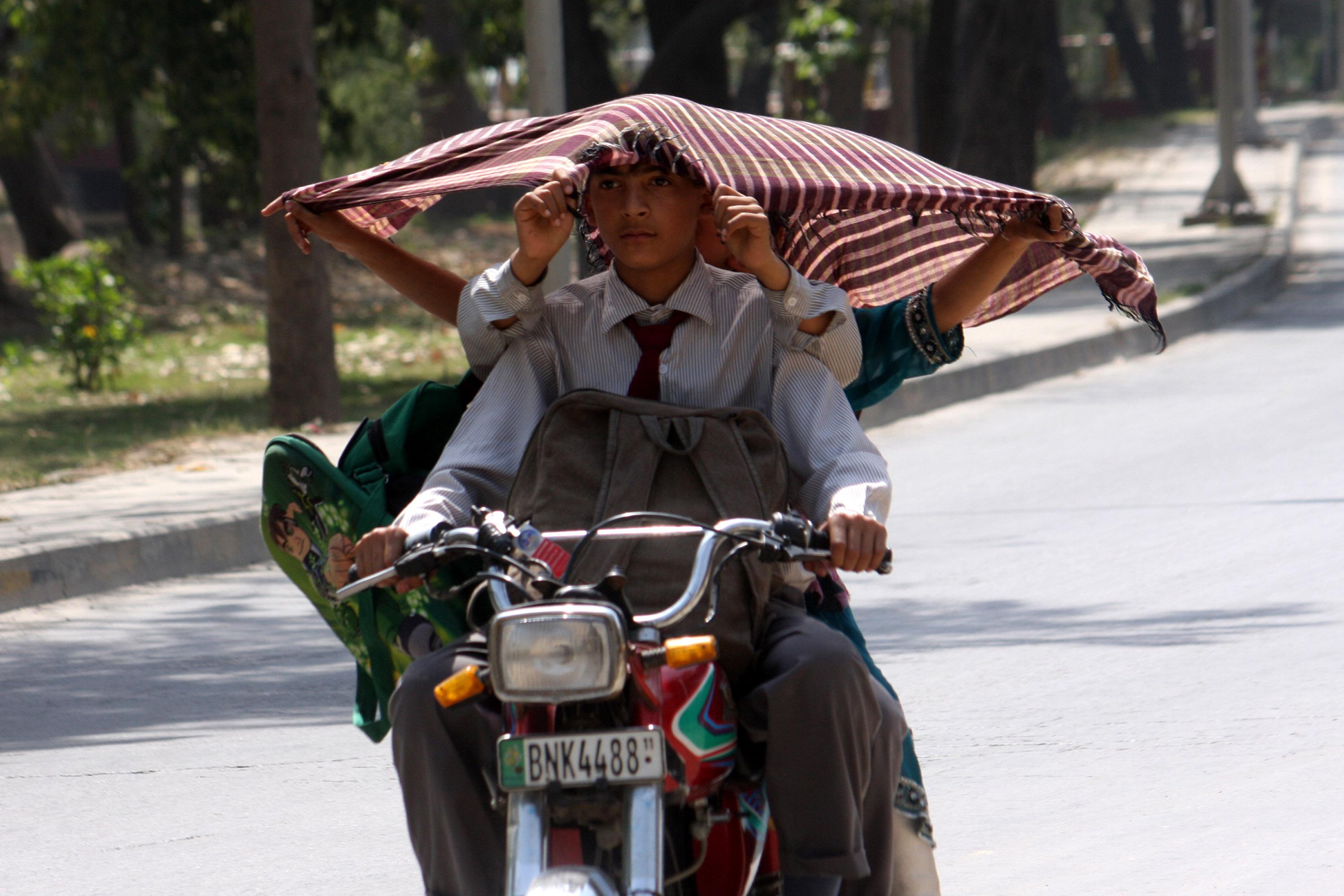
Islamabad, March 26 (IANS) Pakistan is projected to experience a net increase in mortality of 51 deaths per 100,000 people by 2050 as global temperatures continue to rise due to fossil fuels emissions and low and middle-income countries accounting 90 per cent of the premature deaths caused by climate change, local media reported.
According to a study by Climate Impact Lab at the University of Chicago, these are the first projections of rising temperatures' impact on mortality to target adaptation planning. It used highly-localised data from around the world.
“Ten times more people are projected to die each year in lower-income countries (about 391,000 people) than in higher-income countries (about 39,000 people) due to shifting temperatures, despite being expected to have roughly equal populations,” Pakistani daily Dawn quoted the study as saying, emphasising the severe consequences of heatwaves on the Global South.
Pakistan and Burkina Faso are set to bear the brunt of climate change, with Pakistani cities expected to suffer the worst impact.
“While warm, wealthier cities like Phoenix and Madrid are projected to lose an additional 600 and 525 lives each year, respectively, due to a warming climate, Faisalabad, Pakistan, will lose an additional 9,400 lives,” the study stated.
Eight Pakistani cities — Faisalabad, Multan, Gujranwala, Lahore, Peshawar, Hyderabad, Rawalpindi and Islamabad — rank among 15 urban centres in low and middle-income cities expected to experience a rise in net mortality rates in 2050 compared to the 2001-2010 average, Dawn reported.
The projection indicates that heat-related deaths in Pakistan are likely to exceed today’s rates associated with tuberculosis, chronic obstructive pulmonary disease (COPD), and stroke.
“When considering the 301 cities across the globe that we project to see a net increase in temperature-related deaths in 2050, more than 100,000 additional lives will be lost annually, and approximately one in three of those deaths will occur in Pakistani cities,” the study warned.
Reports suggest that these fatalities will occur because Pakistani cities do not have access to adaptation finance available to cope with rising temperatures.
Mariam Saleh Khan, a climate scientist at Islamabad-based think tank Weather and Climate Services, said that multiple scientific studies indicate that humid heat in parts of Pakistan could surpass physiological limits of human survivability, impacting both productivity and overall health.
“Keeping in mind that Pakistan is one of the fastest urbanising countries in South Asia, the current projections of CIL should still be considered lower estimates,” she said, noting that Pakistan lacks a “well-equipped” plan to address the impending disaster.
“After the 2022 heatwaves, the government did focus on initiatives like preparing a couple of heat action plans at the city and provincial scale, but none of those are based on robust scientific knowledge; rather, they are kind of simple heat advisories," she said, while slamming Pakistan’s National Adaptation Plan 2023.
--IANS
scor/as