
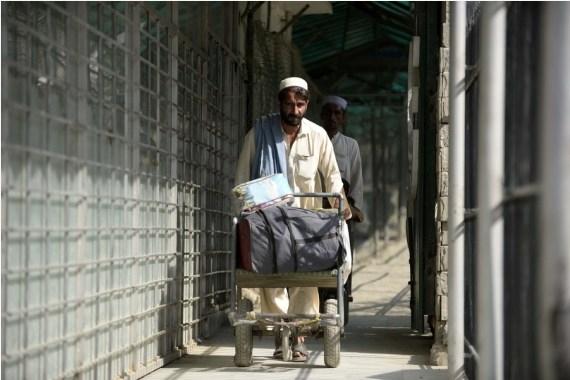
Kabul, Dec 16 (IANS) Over 3000 Afghan refugees have been forcibly repatriated from Iran and Pakistan in a single day, a top Taliban official stated on Tuesday.
Sharing the High Commission for Addressing Migrants’ Issues report on X, Taliban Deputy Spokesperson Mullah Hamdullah Fitrat revealed that 577 families, comprising 3,005 individuals, returned to Afghanistan on Monday, Pajhwok Afghan News reported.
He said that Afghan returnees travelled to Afghanistan through the Islam Qala crossing in Herat, Bahramcha in Helmand, Pul-i-Abresham in Nimroz, Torkham crossing in Nangarhar and Spin Boldak in Kandahar. He stated that 967 families, comprising 5,423 individuals, were taken to their respective areas, while 792 families were provided humanitarian assistance.
Furthermore, telecommunication firms provided 479 SIM cards to refugees who recently returned to Afghanistan.
Fitrat stated that 5,580 Afghan refugees were forcibly deported from Iran and Pakistan on Sunday.
Earlier in November, the United Nations High Commissioner for Refugees (UNHCR) revealed that Pakistan has detained a record number of Afghan migrants in 2025, with the highest number of arrests reported in Balochistan and Punjab provinces.
A new UNHCR report has revealed that the majority of arrests were made in Chagai and Quetta districts of Balochistan and Attock districts of Punjab, Afghanistan's leading news agency Khaama Press reported.
According to the agency, Pakistani authorities arrested 100,971 Afghans between January 1 and mid-November 2025, a record rise compared with about 9,000 arrests in 2024 and over 26,000 in 2023.
UNHCR said 76 per cent of those detained were Afghan Citizen Card holders or undocumented migrants, while the remaining 24 per cent possessed Proof of Registration cards.
The rise in detention of Afghan migrants comes after two government orders in 2025, which directed the removal of Afghan migrants from Islamabad and Rawalpindi and allowed police to arrest PoR-card holders.
Several humanitarian organisations have urged Pakistan to ensure that any returns are voluntary and in accordance with international obligations. They warned that mass expulsions cause instability along the Afghanistan border, where newly returned families often lack housing, employment and basic services.
--IANS
akl/as