
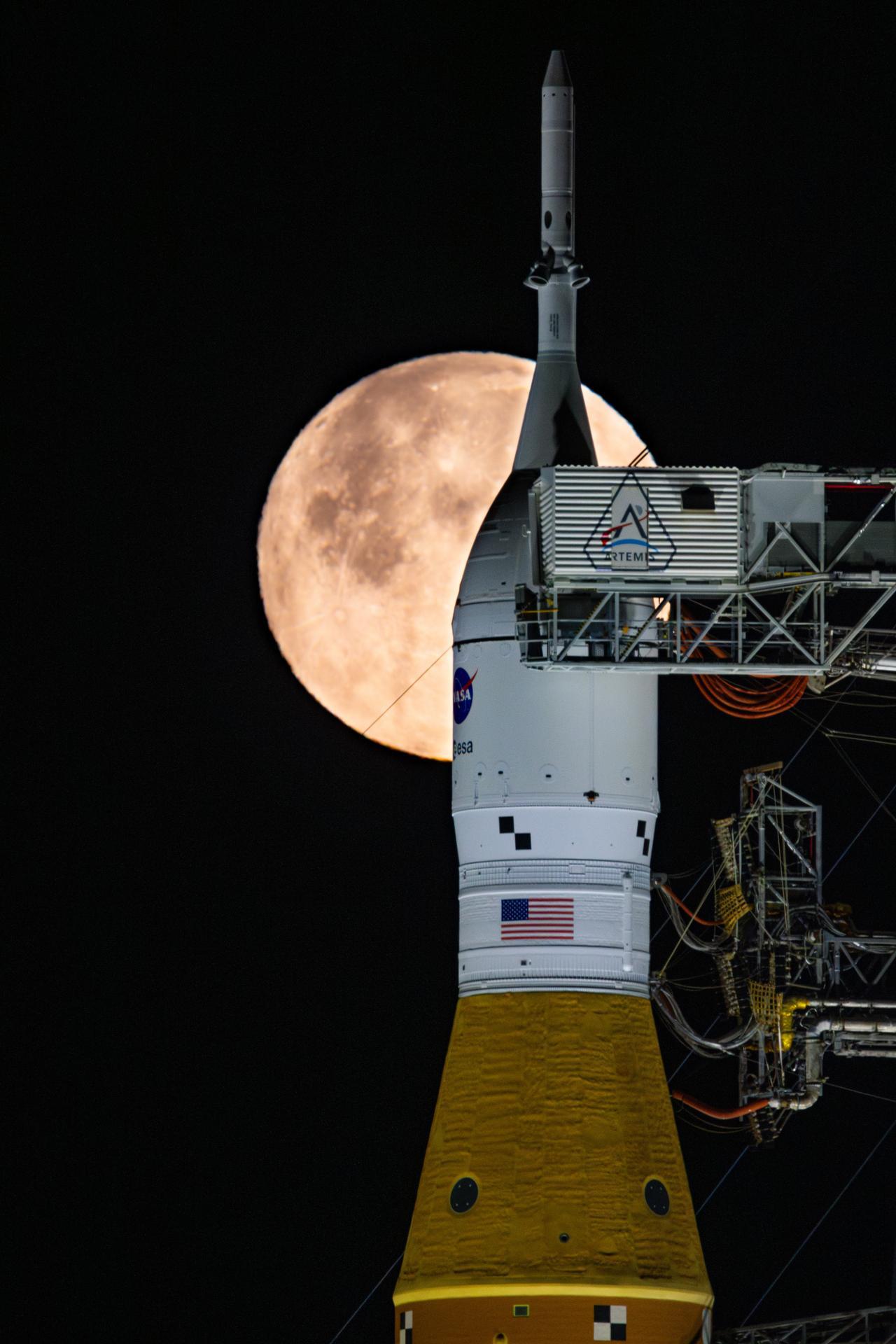
Florida, March 21 (IANS) NASA has returned its Space Launch System (SLS) rocket and the Orion spacecraft for its upcoming Artemis II crewed lunar mission to the launch pad at the agency's Kennedy Space Centre in the US state of Florida.
The integrated SLS and Orion travelled about 4 miles (around 6.4 kilometres) from the Vehicle Assembly Building (VAB) at the space centre, departing at 12:20 a.m. Eastern Time and arriving at the launch pad at 11:21 a.m., completing an 11-hour journey.
NASA teams are now preparing for the final stage of prelaunch activities ahead of a launch window opening April 1, which extends through April 6.
Following a wet dress rehearsal on February 21, teams identified an issue preventing helium from flowing to the rocket's upper stage. The rocket and spacecraft were returned to the VAB for repairs.
While there, engineers also refreshed and retested multiple systems on the rocket, including activating new flight termination system batteries, replacing batteries on the upper stage, core stage, and solid rocket boosters, and charging Orion's launch abort system batteries.
Engineers also replaced a seal on the core stage liquid oxygen feed line and reassembled and retested the oxygen tail service mast umbilical plate to ensure a tight seal, according to NASA.
The Artemis II mission will send four astronauts on an approximately 10-day journey around the Moon and back.
The Artemis III mission is expected to include a rendezvous and docking with one or both commercial lunar landers being developed by SpaceX and Blue Origin, in-space tests of the docked vehicles, integrated checkout of life support, communications, and propulsion systems, as well as tests of the new Extravehicular Activity suits, according to NASA.
The crew consists of NASA astronauts Reid Wiseman, Victor Glover and Christina Koch, and Canadian Space Agency astronaut Jeremy Hansen.
--IANS
sd/