
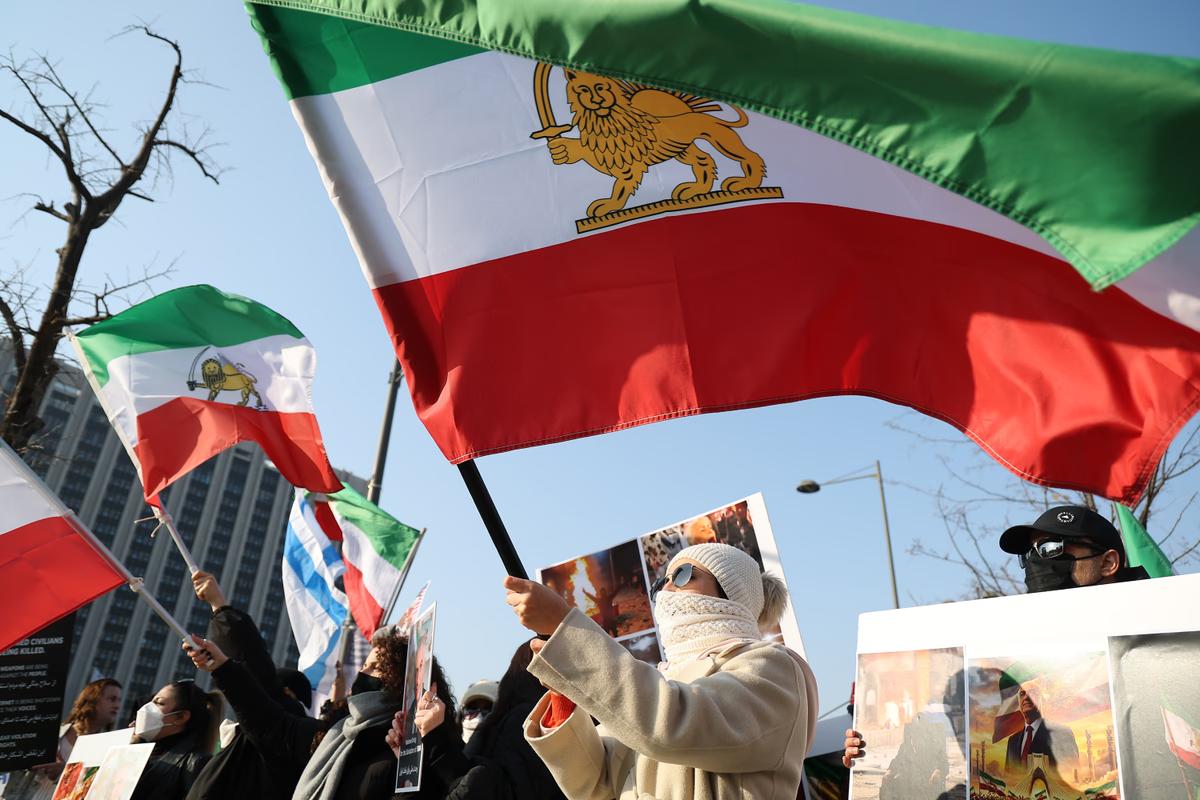
With the Mullah regime’s perilous despotic wave at the brink of a massive collapse, the popular uprising by the people of Iran has left the entire Islamic world mute and watchful. The country is facing an intense public upheaval. Many protesters have been killed or arrested, and if reports are to be believed, many are still awaiting execution under the tyranny of power, while the world witnesses the unfolding chaos.
Though not a part of the Arab world, Iran today, invokes a stark memory of the Arab Spring and the revolts that overthrew regimes. The signs are actively pointing toward the dismantling of an Islamist establishment that is authoritarian and marked by uncompromising brutality. Much of its violent suppression of people on the streets remains hidden from the.
Throughout the Arab Spring, key factors that proved instrumental in the overthrow of regimes included unemployment, inequality, brutality on people, and the suppression of women under Islamic law. A reality that is undeniable across much of the Muslim world is the dominance of religiously sanctioned power overwhelmingly held by authoritarian leaders. As the most dominant force, at present, this power is increasingly being questioned on the streets and within institutions. Since Islam’s early conquests and the establishment of new Islamic territories, history has repeatedly witnessed such periods of distress. The extreme idealization of religious fundamentals across Islam’s profound reach and influence attempted to overturn the indigenous traditions of lands under its control.
Across the Arab world, uprisings against repressive regimes were common. Egypt, too, witnessed widespread public outrage against its dictatorial government. Violent clashes between citizens and security personnel led to the overthrow of Hosni Mubarak in 2011, with many demonstrators killed on the streets. Protesters demanded freedom of speech, while circumstances such as unemployment and food-price inflation, similar to what Iran experiences today, intensified aggression in the country. The Muslim Brotherhood, a transnational Sunni Islamist organization founded in Egypt, subsequently came to power.
Similar protests occurred in Saudi Arabia. The country, a Sunni-dominated one, witnessed significant Shia-led protests demanding equal rights and an end to discrimination. Women, under the country’s interpretation of Sharia law, were strictly restricted from free public participation, which was largely reserved for men. Women were strictly confined to their private sphere. Over time, the country’s reforms permitted women to vote and were nominated to the Shura Councils. Shura councils are advisory groups that are formulated based on consultative traditions. They had previously been a space meant for men alone. The English equivalent of Shura is deliberation. A process of mutual sharing of opinions before a decision is arrived at both in administration and societal level is what a Shura council does. Saudi Arabia’s uprising did not escalate to the point of removing the ruling leadership.
After a long period of conservatism, Saudi Arabia began a process of transformation under its moderniser, Mohammed bin Salman, the crown prince. His regime introduced major social reforms, allowing women to drive, opening cinemas, concerts, and tourism, and reducing the country’s dependence on oil by exploring new economic opportunities.
Syria, though overwhelmingly Islamic, remained secular with its Christian minority comprising about ten percent. It also experienced intense public unrest. Inspired by the uprisings in Tunisia and Egypt, protests erupted across Syrian cities during the Arab Spring. To maintain his regime, Bashar al-Assad, Syria’s tyrannical ruler, responded with brutal force. The Arab uprisings led to devastating consequences in Syria, killing many people and the displacement of nearly thirteen million people. Nevertheless, Assad’s regime survived with the support of Russia and Iran. The ultimate outcome was the near-total disruption in the Syrian state.
In Iran’s case, especially among the youth, women have taken to the streets with an outcry for freedom and equality. The country, controlled by its clerical leadership, appears poised to witness a major collapse. The new demonstrations that began in December 2025 were long overdue, following the suppression of previous protests that erupted after the death of Mahsa Amini in 2022. Iranian women have been symbolically rejecting the country’s religious authority by discarding their religious head-cover called hijab. Discarding hijabs in public and burning them in piles became notorious acts of defiance, prompting a severe crackdown by the regime.
The struggle and discontent against the theocracy’s enforced measures reached a peak when Mahsa Amini’s custodial death shook the country in 2022. Mahsa Amini, metaphorically, made a great sacrifice and became a symbol of resistance. The regime then attempted to contain the protests that erupted against the mandatory wearing of the hijab. The streets of the country were overwhelmingly flooded by ordinary, frustrated citizens. The popular outrage that crippled Iranian cities became famous for its war cry, “Women, Life and Freedom.”
At present, the uprising, expected to be capable of overthrowing Ayatollah Khamenei’s hierocratic regime, has been met with violent suppression, resulting in the deaths of hundreds. Iran’s civilizational imprints have been affected by the Islamic influx, and the current aggression by its people is also seen as an outcome of a realization of their trampled civilizational past.
Islam, across the globe, is fiercely confronting a question: why, despite its religious sentiments, is it unable to maintain peace in many countries, and why does it face such intense opposition from within its own religious precincts? Iran’s future remains uncertain, with its pre-Islamic identity rising from the ruins of resistance against the present order. An aspirational force that survived under crushing circumstances has now risen from deep distress.
The present unrest is the largest wave of street protests the country has witnessed in recent years. Much speculation has followed, including the possible expulsion of the cleric-leadership. Meanwhile, the United States’ speculated readiness to interfere in the internal turmoil, with an eye toward potential regime change, has placed the present system led by Ali Khameini under increasing pressure. Enforced religious dogmatism underrating the liberal sentiments of Iran’s people had enhanced the reasons that led to this present uprising.
Iran was hit hard by multiple revolts from within. It was an outrageous protest that ultimately dethroned the Pahlavi dynasty in 1979, establishing the Islamic Republic. Again, in 1999, a student-led protest brought chaos to Iranian streets in the demand for democracy. In 2009, the country witnessed another wave of outrage, with people openly demanding free elections and staging multiple anti-government demonstrations. Each time, the government chose to respond with brutal force. The continued reluctance of people to accept the religious code of conduct has once again added to the fury of unrest.
As the world watches chaos in Iran with calculated concern, the question remains: will the country’s theocratic governance be ousted, or will its ruthless crackdown once again temporarily settle the tumult, with more blood being spilled?