
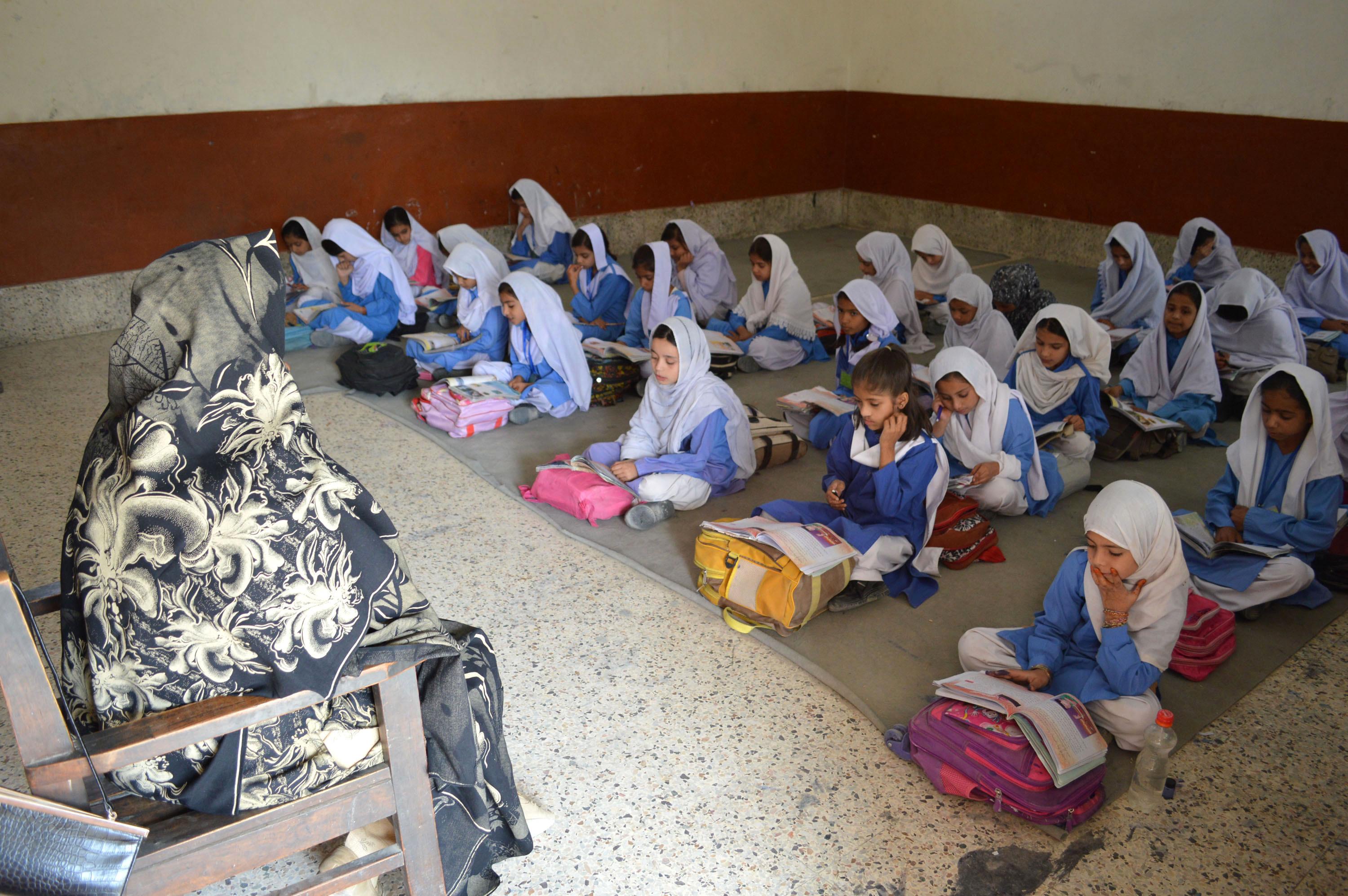
Islamabad, April 2 (IANS) From curriculum to teacher training, budget to quantity metrics and parallel education systems to political interference, Pakistan's education system is currently facing several flaws, a report has stated.
Reasons cited are various factors like overemphasis on quantity over quality, political interference, lack of budget, parallel education systems, outdated syllabus and fractured infrastructure, an article in 'Pakistan Observer' mentioned.
"The most pertinent failure of state of Pakistan in education is its overemphasis on quantity over quality. The state has established long and beautiful buildings and has increased the number of universities, programmes, courses and degrees, while it lacks interest in the quality of education. Quality, here, means that the skills which are acquired through education must align with modern needs. Moreover, HEC provides greater funds to those who produce a significant numbers of academic research papers, journals and articles, often overlooking their quality," Gulsher Ali wrote in Pakistan Observer.
Education experts have emphasised that these researches have negligible impact on the society, technology and economy of Pakistan. Secondly, political interference directly affects education system in Pakistan as lawmakers make educational policies. For example, the syllabus of history, social sciences and humanities is made to promote the state’s narrative and fabricates the truth.
Furthermore, the administrative structure of education is completely centralised and influenced by government officials, the opinion piece mentioned while highlighting examples of higher authorities appointing Vice Chancellor, Rector or admin of many educational institutions. In some cases, an incapable person is hired for the top position, which causes insignificant consequences.
Thirdly, the article mentioned, three educational systems operate in Pakistan simultaneously - government, private and madrassah education systems. All three education systems operate differently and have different repercussions. Furthermore, they have different mediums of instruction like government in Urdu medium, private in English medium and madrassah in "religious medium", creating social divisions in terms of knowledge, thoughts and skills.
Fourthly, the article in Pakistan Observer detailed that according to the Economic Survey of Pakistan (2024-2025), Pakistan spends only 0.8 per cent of the Gross Domestic Product (GDP) on its education, which is less than the international recommendation of 4-6 per cent of its GDP. This is a very low percentage spent on education in Pakistan since the country's population is increasing day by day.
"Last but not least, what is being taught to the students is outdated curriculum, which hinders timely information, critical thinking and necessary skills, while it encourages rote learning and dogmatism. In the contemporary world, along with theoretical aspects, practical implications and skills have become a driving force of prosperity and development in the world. The developed nations are continuously changing their syllabus according to the modern needs; however, Pakistan is still stagnant on the century-old education system."
--IANS
akl/as