
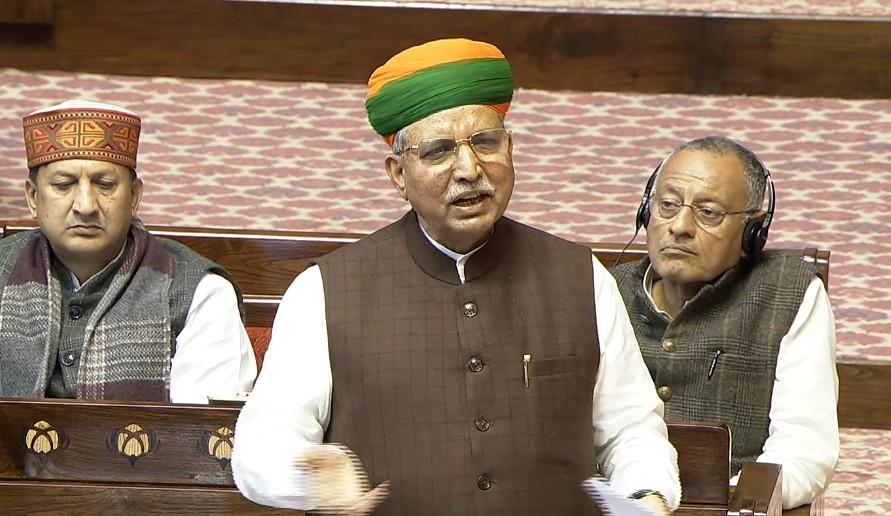
New Delhi, Dec 17 (IANS) The Rajya Sabha on Wednesday passed the Repealing and Amending Bill, 2025, which sought to repeal 71 obsolete laws and make minor amendments to four others, as part of the Central government's ongoing efforts to declutter the statute book and eliminate colonial-era remnants.
The Bill was passed through a voice vote. Introduced in the Lok Sabha on December 15 and passed the next day, the Bill targets principally amendment Acts of which the provisions have been incorporated into main laws, along with outdated enactments like the Indian Tramways Act, 1886.
Union Law Minister Arjun Ram Meghwal defended the legislation as a "housekeeping measure" aligned with Prime Minister Narendra Modi's five pledges (Panch Pran), including shedding colonial mindset, promoting unity, ease of living, ease of doing business, citizen-centric approach, and the mantra of minimum government, maximum governance.
Replying to concerns that the Bill was rushed, Meghwal emphasised it was not done in haste, contrasting it with the UPA governments, which he claimed did not introduce any such repealing Bills.
He highlighted amendments removing discriminatory provisions in the Indian Succession Act, 1925, where Hindus, Buddhists, Jains, Sikhs, and Parsis were required to “probate wills” in certain presidency towns like Calcutta (Kolkata), Bombay (Mumbai) and Madras (Chennai), unlike Muslims -- a practice he termed colonial and violative of equality under the Constitution.
The Minister also addressed updates to the General Clauses Act, 1897, and Code of Criminal Procedure, incorporating modern "speed post" in place of obsolete "registered post" systems.
For the Disaster Management Act, 2005 (enacted under UPA), the Bill substitutes "preparation" with "prevention" to correct a drafting error.
Trinamool Congress member Sushmita Dev questioned why the anti-defection law (Tenth Schedule of the Constitution) was excluded, arguing that the Speaker's absolute powers for disqualification are often misused to encourage horse-trading rather than curb defections.
Other members raised unrelated issues; Incarcerated AIP MP Engineer Rashid sought amendments to the Unlawful Activities (Prevention) Act (UAPA), calling some provisions draconian and sub-judice.
Discussions also touched on judicial reforms, including increasing judge numbers to reduce pendency, by senior Congress member Vivek Tankha.
Meghwal clarified that UAPA and judicial appointments require separate discussions, and the government is actively addressing judicial bottlenecks without haste.
The non-controversial Bill underscores periodic legal cleanup, with the Modi government having repealed over 1,500 obsolete laws since 2014, while sparking broader debates on electoral and judicial reforms during the Winter Session.
--IANS
sktr/dpb