
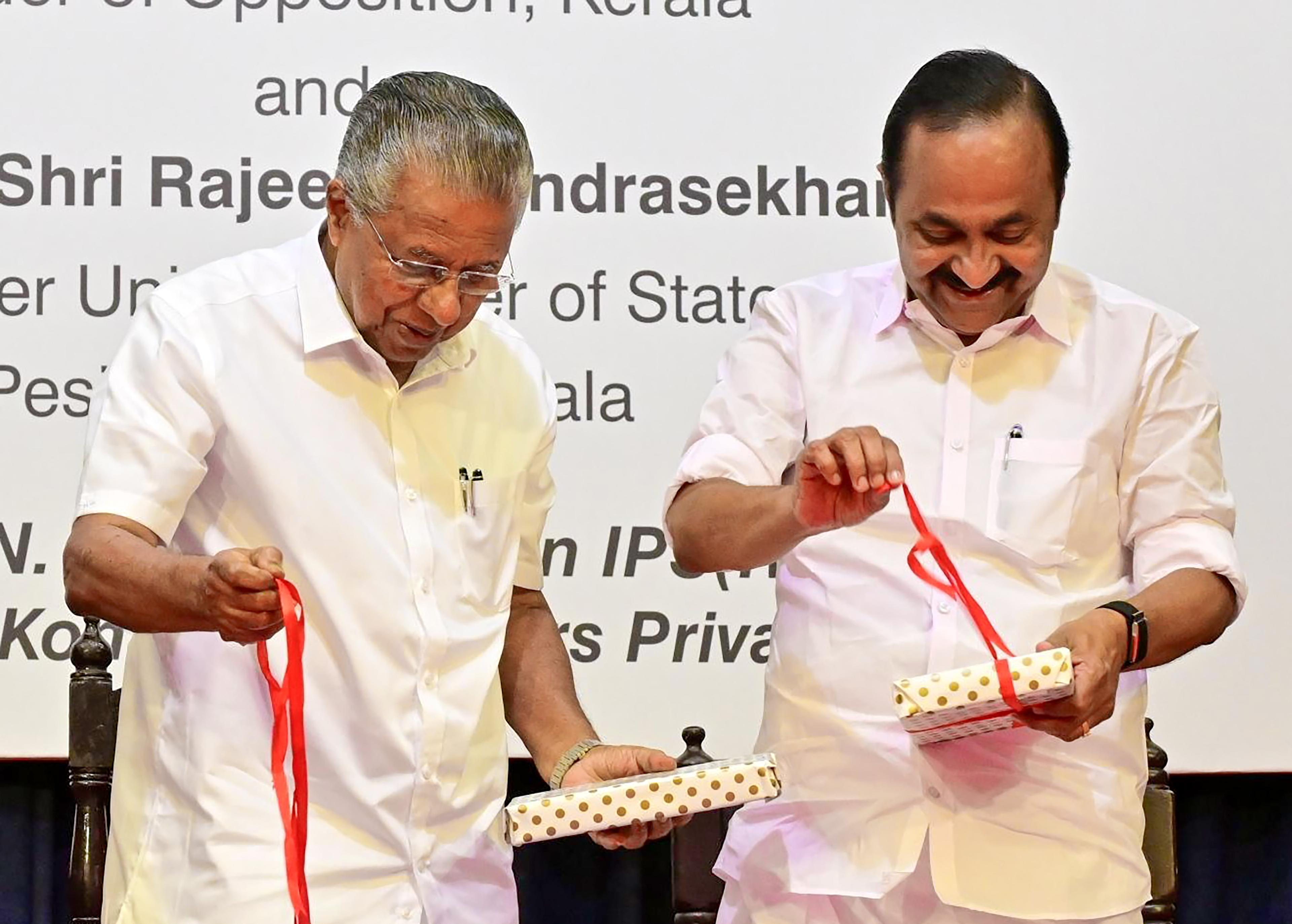
Thiruvananthapuram, March 15 (IANS) With Kerala going to the polls on April 9, the political contest in the state is once again expected to revolve around the three major fronts - the ruling Left Democratic Front led by the Communist Party of India-Marxist, and the opposition United Democratic Front headed by the Congress, and the National Democratic Alliance spearheaded by the Bharatiya Janata Party.
Kerala has 140 Assembly seats, and in the 2021 polls, the Left won 99 seats, the Congress-led UDF 41 seats, while the BJP drew a blank, losing the only seat that they won for the first time in the party's history in 2016.
However, political observers note that the trajectory of the Assembly election in the state has often been shaped by the outcome of the local body polls held a few months earlier.
If this pattern continues, then the Congress-led UDF is in pole position, as they had an excellent tally of seats, pushing the Left to second position, and the BJP, apart from winning the Thiruvananthapuram Corporation, saw a reduction in vote percentage compared to previous polls.
Over the past two decades, the performance of the three fronts in Assembly elections has closely mirrored their show in the local self-government polls, which are usually held around four months before the Assembly poll schedule is announced.
The trend has largely been that whichever of the two traditional political fronts, the LDF or the Congress-led UDF, secures the upper hand in the local body elections tends to carry that momentum into the Assembly polls and eventually forms the government.
This pattern has been evident in several election cycles, with the grassroots verdict at the panchayat, municipality, and corporation levels often serving as a political barometer of public mood ahead of the Assembly contest.
For the ruling LDF headed by Chief Minister Pinarayi Vijayan, the election represents a crucial test of whether it can retain power for a third consecutive term, something that would be unprecedented in Kerala’s electoral history.
The front returned to power in 2021, breaking the state's long-standing tradition of alternating governments.
The opposition UDF, led by Leader of the Opposition V. D. Satheesan, is hoping to capitalise on anti-incumbency against the Left government after nearly a decade in power.
Congress leaders believe that the state’s political cycle and the mood reflected in grassroots elections could favour a change of government.
For the BJP-led NDA, the election remains an opportunity to expand its political footprint in a state where it has struggled to translate vote share into assembly seats.
The alliance is hoping that its improved visibility following the 2024 Lok Sabha election victory in Thrissur by Suresh Gopi could help it emerge as a stronger player in triangular contests.
As campaigning gathers pace, the interplay between these three fronts and the political signals from grassroots electoral trends could once again determine which alliance eventually captures power in the state.
--IANS
sg/vd