
Soumitra Bose
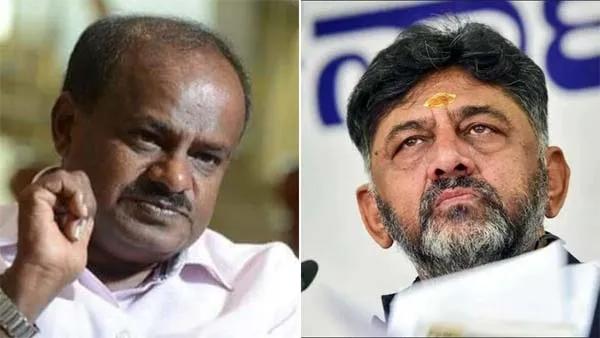
New Delhi (The Hawk): Its clearly decided now: After the ensuing Karnataka Assembly poll results will be out, the winning party or the winning combine will opt for a Vokkaliga CM this time. No more Lingayat CM, thanks to the fiasco called B S Yeddiurappa factor for the BJP which is almost out-n-gone because of his Lingayat superciliousness that not only put of the peace-loving Lingayats but the pthers as well like the Vokkaliga etc. To “re-patao” them in their facour, the parties have begun wooing them leaving aside the mess-making Lingayats. This is especially true with the Congress which is seeing the power in the state post-Karnataka Assembly Election results. Congress does not want a Lingayat but is opting for D Shiv Kumar, a Vokkaliga who’s bearing all factors of the Congress-elections in the Karnataka. …Congress is making an all-out effort to breach the Gowda fortress to capture Vidhana Soudha in summer. BJP, which has half a dozen important Vokkaliga leaders on its rolls, argues that the community is nobody’s monopoly, and a sizeable number are with the saffron party. …June 1, 1996, is a red-letter day in the history of Vokkaligas — the second most powerful caste in Karnataka. HD Deve Gowda took oath as the Prime Minister of India on that day and a sub-regional caste celebrated its leader who had reached the pinnacle of power in India. That day, Gowda became their undisputed leader who still controls the Vokkaliga vote bank in Karnataka. It is a different matter that the same caste defeated the Gowda clan to make another Vokkaliga SM Krishna the chief minister, just three years later. But Gowda has remained their topmost leader for almost 30 years.
Karnataka politics, post-Independence, has been dominated by two castes — Lingayats and Vokkaligas. They have been ruling the state by turn barring a few terms. Unlike the Lingayats, who have a pan Karnataka presence, Vokkaligas (literal meaning ‘farmer’) are an old Mysore region centric caste with a huge population in just three-four districts. This 100% agrarian community had a few medieval chieftains — Kempe Gowda — the founder of Bengaluru is the most famous among them. During the rule of Mysore Kings under the British, Vokkaligas were restricted to farming. Literacy level and political participation of the community were abysmal. The Independence in 1947, changed all that and Vokkaligas became key players kin Karnataka’s socio-political life. Between 1947 and 1956, till the reunification of all Kannada speaking areas under one state, Vokkaligas used to control the levers of power in old Mysore state. The reorganisation of the state changed that, forcing them to accept the hegemony of Lingayats, who are a dominant caste in north Karnataka and have a sizeable population in old Mysore.
Sometime in early 1950s, during the height of Karnataka Ekeekarana Andolana (Karnataka Unification Movement), top leaders of the Vokkaliga caste had gathered at a house in central Bengaluru to decide the future course of their action. All of them were Congress leaders and had participated in the freedom movement. Most had impeccable personal credentials.
But majority of them were not too enthusiastic about the unification of all Kannada-speaking areas under one administration. They had many reasons for that. Some argued that Maharaja’s Mysore or Old Mysore was already a well-developed model state and merging poor Mumbai-Karnataka and Hyderabad-Karnataka regions would be a burden on the state exchequer and resources. Some had bigger fears. They argued that once all Kannada speaking areas unite, the Vokkaligas will lose their caste dominance paving way for the Lingayat hegemony. Two most powerful castes of the state were wary of each other even then. But the then chief minister of old Mysore state, Kengal Hanumanthaiah, was all for state unification. A freedom fighter and an able administrator, Hanumanthaiah was a tall leader of the Vokkaligas.
Vetoing his own caste leaders, Hunumanthaiah told them that future generations of Kannadigas would never forgive them if they opposed unification for caste and political reasons. The Vokkaliga leader threw his might behind the unification movement and the new Mysore state with Kannada-speaking regions of Bombay Presidency – including some districts of present-day Karnataka, Nizam’s Hyderabad, Karnataka, Madras Presidency, and an independent, tiny state of Kodagu (Coorg) was born on November 1, 1956. Sadly, Kengal Hanumanthaiah lost power and a Lingayat strongman, S Nijalingappa, took charge as the first chief minister of New Mysore state. As expected, the Vokkaligas lost the chief minister’s chair to Lingayats and they had to wait for 38 years to reclaim the chair. In 1994, HD Deve Gowda became the first Vokkaliga chief minister of united Karnataka. Between 1956 and 1972, four Lingayat chief ministers (S Nijalingappa, BD Jatti, SR Kanthi and Veerendra Patil) ruled the state. Between 1972 and 1983, a Kshatriya D Devaraja Urs and a Brahmin R Gundurao ruled the state minus much Lingayat backing. Ramakrishna Hegde, who became Karnataka’s first non-Congress chief minister in 1983, was also considered an uncrowned Lingayat leader even though he was a Brahmin.
To end Hegde’s rule, the then Prime Minister and Congress president Rajiv Gandhi made a Lingayat stalwart Veerendra Patil KPCC president and chief ministerial candidate in 1989. Under his leadership, the Congress swept the polls by winning 181 seats in the 224-member house. But the Congress chose two Other Backward Class (OBC) leaders – S Bangarappa and M Veerappa Moily — to succeed Patil and the Vokkaligas had to wait till 1994. The Lingayat faith was born out of a 12th century movement for a casteless, egalitarian society led by a Brahmin Basavanna and his followers took it to all corners of Kannada speaking areas over the next centuries. They even came to Vokkaliga heartland old Mysore, and many lower castes and untouchables embraced the new faith. But the Vokkaligas, the landed community, mostly stayed away from it, though there is no record of any clash between the two. For centuries, it was a harmonious co-existence. SM Krishna, a young educated Vokkaliga, secured a Fullbright scholarship in 1954 and left for America to pursue higher studies. Many other young Vokkaligas also followed him in the next few years exposing the community to Western education and thinking.
In the 1960s, the creation of Adi Chunchanagiri Mutt and anointment of a seer brought several sub-castes under one religious head. The Mutt expanded rapidly with the patronage of Vokkaliga politicians and became a behemoth. During the time of elections, all political leaders make a beeline to the Mutt seeking its endorsement and it plays a big role in southern Karnataka politics and social life. According to leaked Caste census data, Vokkaligas form 11% of the total Karnataka population. They rank number four after SCs, Muslims and Lingayats. However, this data is disputed by both Vokkaligas and Lingayats. Vokkaligas claim that their number is much higher, that is, 16%. Like Lingayats, Vokkaligas also have many sub castes and they normally view each other with suspicion. Gangatakara, Dasa, Marasu and Kunchitiga are the four sub-castes among the Vokkaligas.
Vokkaligas decide the outcome of the elections in about 80 Assembly seats, and they are a dominant force in about 50 Assembly constituencies.In 2018, nearly 42 Vokkaligas won the Assembly elections. Of them, 23 were from the JDS. A Vokkaliga, HD Kumaraswamy even became the chief minister with the support of Congress for 14 months. Both Lingayats and Vokkaligas had backed the Congress post-Independence. It changed after 1972. The then Congress chief minister D Devaraj Urs, a Kshatriya, became a champion of the Other Backward Classes, SC/STs and Muslims, threatening the political hegemony of these two castes. In 1983, they ganged up and threw the Congress government out. Between 1983 and 1989, the Janata Party government was mainly a Lingayat-Vokkaliga alliance. Again in 1994, these two castes came together to defeat the Congress. Only in 1989, both had backed the Congress. In the past whenever their political hegemony was threatened, these two castes had buried their differences and voted together against a common enemy. HD Deve Gowda is now 90 and ailing. He is leading the JDS run by a warring family to save his legacy. With the departure of BS Yediyurappa from electoral politics, the Lingayat community is looking out for other opportunities. Though the BJP is trying its best to keep them intact, the Congress, which is mainly a party of OBCs, SCs and Muslims, is hoping that a sizeable number of Lingayats and Vokkaligas will back them in the coming Assembly elections.
KPCC president DK Shivakumar is a Vokkaliga and campaign committee chairman MB Patil is a Lingayat. But these two castes are still wary of Siddaramaiah, the most popular leader in the state. His brazen AHINDA (OBCs, SC/STs and minorities) card has offended them. Unless the Congress gets at least 30% votes of each community (Lingayats and Vokkaligas), it is highly unlikely they will come to power. The ruling BJP, which is fighting a tough election, hopes the Vokkaligas stay with the Gowda clan (JDS) ensuring Congress’ defeat. In the recent years, the BJP has tried to appropriate Vokkaligas by linking their Mutt Adi Chanchanagiri with Goraknath Mutt in Uttar Pradesh, allege some community leaders. Since Vokkaliga Mutt is an ancient Nath Panth Mutt (again there are many versions), UP chief minister Yogi Adityanath has visited it on a few occasions in the last five years. The current seer Nirmalananda Natha Swamy (he was a technocrat before embracing Sanyasa) has an excellent personal rapport with Yogi and had even attended his swearing in. This kind of a new bonhomie has not gone down well with the JDS and Congress. Though they are not openly expressing it.
The Congress is making an all-out effort to breach the Gowda fortress to capture Vidhana Soudha in summer. The BJP, which has half a dozen important Vokkaliga leaders, argues that the community is nobody’s monopoly, and a sizeable number are with the saffron party. When the votes are counted, we will come to know how Vokkaligas voted. Vokkaliga (also transliterated as Vokkaligar, Vakkaliga, Wakkaliga, Okkaligar, Okkiliyan) is a community, or a group of closely-related castes, from the Indian state of Karnataka. They are also present in the neighbouring state of Tamil Nadu. As a community of warriors and cultivators they have historically had notable demographic, political, and economic dominance in Old Mysore (region). It is believed by some historians that the Rashtrakutas and Western Gangas were of Vokkaliga origin. The Vokkaligas occupied administrative positions in the Vijaynagar Empire. They later formed the early rulers of the Nayakas of Keladi. The Vokkaligas had the most families in the ruling classes of the 17th century when the Arasu caste of the Wodeyars was created to exclude them. Under the Kingdom of Mysore they operated autonomously and also served in the army and militia.The Vokkaligas formed the landed-gentry and warrior class of Karnataka. Most subsects of the Vokkaliga community are designated as Forward castes by the Central Government of India. While some subsects in rural areas, are designated as Other Backward Class by the Karnataka Government. Vokkaligas of the Lingayat faith are treated separately.
Vokkaligas commonly carry titles such as Gowda, Hegdeand Gounder. Vokkaliga is a Kannada-language word found in some of the earliest available literary works of the language, such as the Kavirajamarga, Pampa Bharata, and Mangaraja's Nighantu. It has been used as an appellation for the cultivator community since time immemorial. Generally, the term has come to mean an agriculturist though various etymological derivations are available, including:Kempe Gowda I chieftain under the Vijayanagara Empire. The city of Bengaluru was founded by Kempe Gowda in 1537. The word okka or okkalu is a Kannada word for a family or a clanand an okkaliga is a person belonging to such a family. This is an allusion to the totemistic exogamous clans which together form an endogamous sub group, of which there are many amongst the Vokkaligas. These clans are called Bali, Bedagu, Kutumba, Gotra or simply Okkalu all of which mean family. They are named after their progenitor, primary occupation or in most cases after various birds, animals or objects.Vokkaliga is analogous to Kutumbin in Sanskrit.Okkalutana in Kannada means agriculture. Alternate etymologies include okku, which means "threshing" in Kannada, and Vokkaliga means someone from a family that threshes. According to historian Suryanath U. Kamath, the word Gowda derives from Gavunda. The German Indologist Gustav Oppert opined that the root of ‘Gowda’ is a Dravidian word meaning "mountain". The term "Gowda" and its archaic forms in Old Kannada such as Gamunda, Gavunda, Gavuda, Gonda, appear frequently in the inscriptions of Karnataka. The Epigraphia Carnatica is replete with references to land grants, donations to temples, hero-stones (Veeragallu), stone edicts and copper plates dating back to the age of the Western Ganga Dynasty (est. 350 CE) and earlier. The Gavundas were landlords that collected taxes and rendered military service to the Kings. Noboru Karashima says the Gavundas had functions corresponding to that of the Chola Vellala Nattars. The majority of the gavundas were derived from the Vokkaligas; but by the 10th century, the term gavunda also came to denote chiefship of a community or group and was adopted by the heads of other communities assimilated into the early medieval state. The Vokkaligas of Tamil Nadu use Gowdar and Gounder as their surname.The Tamil origins to the word Gounder claim its derivation from kavundan or kamindan (one who watches over). Whether the name Gauda/Gowda is an allusion to the Gau?a region or not has not been conclusively proved.The term Vokkaliga was used to refer to Canarese cultivators. Vokkaliga community has several sub-groups within its fold such as Gangadhikara, Namdhari Vokkaliga, Morasu Vokkaliga, Kunchitiga, Halikkar(Palikkar) Vokkaliga, Reddy Vokkaliga, Gounder,Tulu Gowda. etc. Lingayat converts of the various Vokkaligas are categorised as Lingayats.Exogamy at the family/clan level is strictly controlled by using the idiom of Mane Devaru (the patron god of the given exogamic clan) which dictates that the followers of same Mane Devaru are siblings and marriage is thus forbidden, allowing marital alliances only with another clan and not within.The Gangadikara Vokkaligas, also known as the Gangatkars are numerically the largest among the Vokkaliga. The Gangadikaras are mostly found in the Mysore, Mandya, Chamarajnagar, Hassan, Bangalore, Ramanagara and Tumkur districts of Karnataka. Gangawadi was the name for the area covering these districts, ruled over by the Western Ganga Dynasty and Gangadikara is a contraction of the term Gangawadikara (A man of Gangawadi). According to Burton Stein and L. K. Iyer the Ganga rulers were Gangadikara Vokkaliga chiefs. The Gangadikara Gowdas claim to be descendants of the erstwhile Ganga rulers. The administrative setup of Gangas vested power in the Ooru Gauda, Nadu Gauda, Pergade (archaic for Hegde, Pergade->Peggade->Heggade) and so on, at various levels of administration and apart from administrative duties, the Gauda was expected to raise militia when called for.The Gangadikaras and other Vokkaligas were considered analogous to the Vellalar Chieftains of Tamil Country. They are Deccan Kshatriyas corresponding to Marathas of Maharashtra. The Gangadikaras and the Kongu Vellalars could possibly share a common origin. In fact, the word Konga is the Tamil equivalent for Ganga. The Gangadikaras have two primary sections – the Bujjanige (or Dhaare Shastradavaru) and the Pettige (or Veelyada Shastradavaru) based on differences in rituals performed during the wedding ceremony. They can be Shaiva or Vaishnava in religious affiliation (called Mullu and Dasa sects). Cheluru Gangadikaras (also called Chelaru), another small sub-sect, are said to be strictly vegetarian, a vestige of the times when the Gangas followed Jainism. Oral traditions of the people maintain that after the decline of the Ganga power they reverted to Hinduism retaining certain Jain practices. The Gangadikara Vokkaligas have as many as 40 kulas, exogamous clans, known in Kannada as Bedagu. They are: Morasu Vokkaliga,The border regions of Karnataka around odern-day Bangalore, Tumkur and Hosur was known as Morasu-nadu and was dominated by Morasu Vokkaligas,The chief endogamous divisions of the Morasu Vokkaligas are Morasu proper, Musuku, Palyada sime and Reddy. They speak both Kannada and Telugu. Telugu is restricted to the two sections of Reddy and Palyada Sime. The usual caste titles are Gowda for the Kannada section and Reddy for the Telugu section. Many Palegars belonged to the Musuku group. The Palegars of Devanhalli, Dodballapur, Yelahanka, Magadi, Hoskote, Kolar, Anekal and Koratagere were Morasu Vokkaligas. The famous Kempe Gowda I, the founder of Bangalore City, was the most distinguished of the Palegars of Magadi. The family of Kempe Gowda migrated from Kanchi in the 15th century.The Devanahalli Fort was built by Malla Bhaire Gowda to immortalise Bhaire Gowda, the headman of one of the seven clans that migrated from Kanchi. Burton Stein noted a link between Morasu Vokkaligas and the Thondaimandala Vellala, Kunchitiga Vokkaliga, Kunchitigas are concentrated mostly in Tumkur, Chitradurga, Bangalore and Mysore. They are also found in Salem, Coimbatore and Theni districts of Tamil Nadu. They were traditionally agriculturists and were known for being a successful and enterprising group,Namdhari Vokkaligas,The Namdhari Vokkaliga is the oldest and second largest Vokkaliga sub-groupand are concentrated in Malenadu. They are also called Malava Gowdas. They use the surnames 'Hegde' and 'Gowda'. The Namdharis were Jains who converted to Vaishnavism along with their Hoysala King Vishnuvardhanaand are followers of Sri Ramanujacharya. The Hoysalas were possibly of Namdhari Vokkaliga origin. Historians refer to the founders of the Hoysala dynasty as natives of Malenadu based on numerous inscriptions calling them Maleparolganda or "Lord of the Male (hills) chiefs" (Malepas). Some historians believe Hoysala originated from Sosevuru (Modern Angadi, Mudigere taluk). Hoysalas also strongly supported Kannada language. The early Hoysala chiefs had alliances with the Western Ganga Dynasty and claimed to be heirs to the Gangas. Several of the major feudatories of the Hoysalas were Vokkaligas. Many Vokkaligas migrated into Tamil Nadu under Hoysala rule.Some of the Malenadu Vokkaligas took to Lingayatism. The Keladi Nayakas were Malava Gowdas of Veerashaiva faith.Hallikkar Vokkaliga,Pallikar Vokkaligas are a subsect of Vokkaligas. They were mainly engaged in the rearing of cattle. According to M. N. Srinivas, the Hallikar were related to the Gollas and Kurubas. The namesake is the best in the far-famed Amrit Mahal cattle.They are also called Servegars as they were chief herdsmen in the Amrit Mahal Department.They use Gowda and Nayak as surnames. Tulu and Kodagu Vokkaliga,Tulu and Arebhase Gowda (Gauda) are the subsect of the Vokkaliga community located primarily in the South Canara District, Kodagu District, Indian state of Karnataka and Bandadka village of Kasaragod, Kerala State. They are said to have 10 Kutumba and 18 Bari as their primordial root families, from which a Nuru Mane or "hundred families" arose. Jogi (Jogi Vokkaliga), Jogi Vokkaligas are mostly found in parts of Chitradurga, Shivamogga, Tumkur and Mandya districts. They worship Bhairava. They were the teachers (mattpati) of Adichunchanagiri matt during its early days. The Jogi are disciples of yoga and traditionally wear saffron-colored clothing. Nonaba Vokkaliga, They were residents of the ancient Kingdom of Nonambavadi which was ruled by the Pallavas up till 10th century A.D. The Pallavas also called themselves as Nonambadhi Raja, Nonamba Pallava, Pallavadhi Raja, etc. This section of the Vokkaligas are Lingayats by faith. In most respects, they follow the same customs as the Gangadhikara Vokkaligas. Sadars, They are Vokkaligas found chiefly in the Shimoga and Chitradurga Districts. They were originally Jains, though many converted to the Lingayat and Hindu faiths. The Hindus worship both Siva and Vishnu, while the Jains worship the Jain Tirthankaras and Hindu Gods as well. The non-Lingayats, are divided into Huvvinavaru ("Those of flowers") and Hongeyavaru ("Those of the Honge Mara"). Sadas had a high social status due to their strict vegetarianism and total abstinence. They have the usual Kattemane form of caste organization. The use the caste title Gowda. Varna Classification,The varna system of Brahmanic ritual ranking never really took hold in South Indian society. The two intermediate dvija varnas—the Kshatriyas[107][108] and Vaishyas—did not exist,James Manor said that. "Varnas – the four large traditional divisions of Hindu society, which exclude Dalits – have less importance in South India than elsewhere because there are no indigenous Kshatriyas and Vaisyas in the South. There were essentially three classes: Brahmin, non-Brahmin and Dalit. Vokkaligas were considered non-Brahmin upper-castes. Quoting Gail Omvedt:
· "In addition the three way ' caste division ( Brahman , non - Brahman , Untouchable ) seems particularly prominent here. There are no recognized 'Ksatriya' jatis anywhere in the south, and the three states (in contrast to the more inequalitarian hierarchies of Tamil Nadu and Kerala) are characterized by the dominance of large peasant jatis with landholding rights who historically supplied many of the zamindars and rulers but remained classed as 'Shudra' in the varna scheme."
· Therefore Vokkaligas along with other ruling castes like Bunts, Marathas and Nairs were classified as "Upper shudra"/"Sat shudra" during the British Raj. This ritual status was not accepted by the Vokkaligas and was misleading as historically, dominant land-holding castes like the Vokkaligas, Vellalars and Reddys belonged to the ruling classes and were analogous to the Kshatriyas of the Brahmanical society.
· "In the 17th Century, Chikkadevaraja created the Urs caste and classified it into 31 clans. Of these, 13 clans were deemed superior, while the remaining 18 were placed lower in the hierarchy. This latter comprised ruling families in the domain he was rapidly expanding. The most populous caste in this region, the Gowdas (the caste name Vokkaliga was later affixed to it during the British Census), clearly had more families in the ruling classes."
· Economy
· Before the 20th century Vokkaligas were the landed gentry and agricultural caste of Karnataka.[24][25][3] Despite the community enjoying the status of chieftains and zamindars, there were also a lot of small landholding farmers.They, along with the Lingayats, owned most of the cultivated land in the state. Therefore they were considered forward castes and dominant-majority communities. In 1961, Karnataka passed a new Land Reforms Act under the then Revenue minister and idealist Kadidal Manjappa (a Vokkaliga). This was followed by another Land Reform Act passed in 1973 by Ex-Chief Minister Devaraj Urs. These acts redistributed land from the Vokkaliga landlords to the landless and land-poor.