
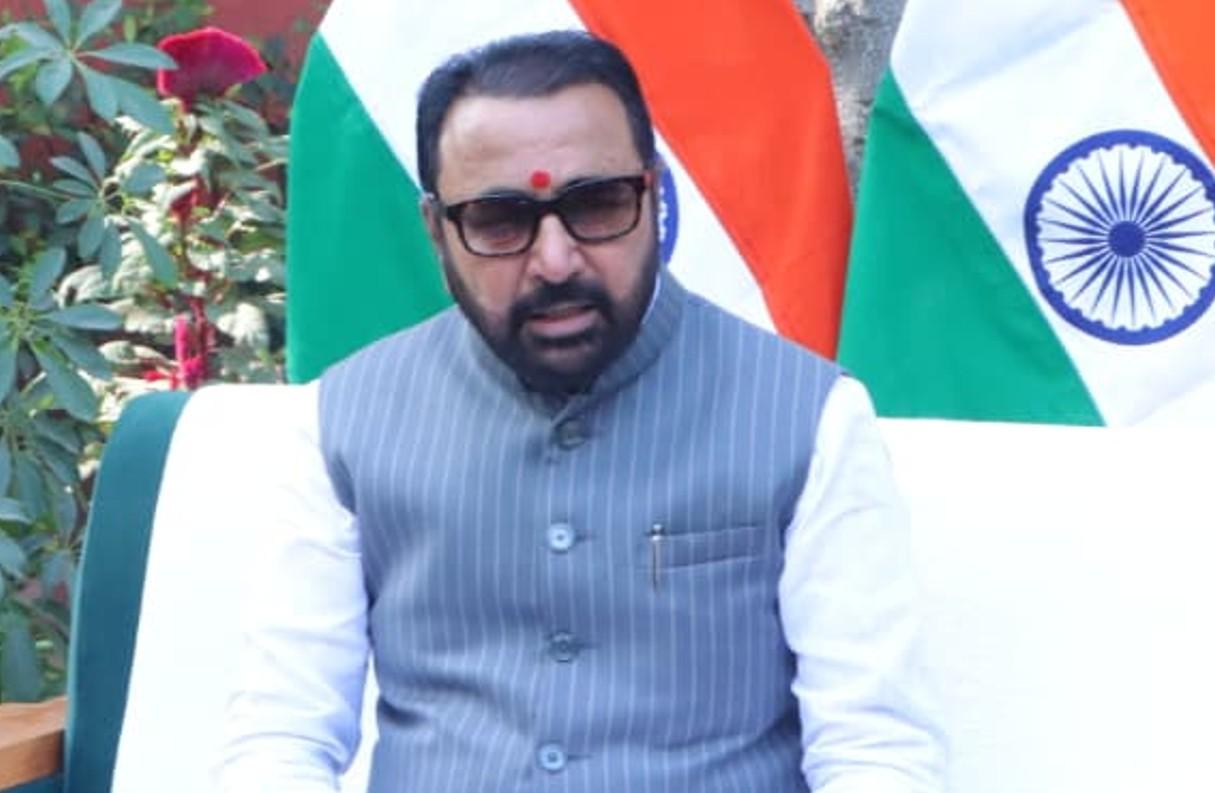
New Delhi, Dec 17 (IANS) India's collaboration with the World Health Organization (WHO) reflects a shared commitment to bring traditional medicine into the mainstream, said Union Minister Prataprao Jadhav on Wednesday.
Speaking at the second WHO Global Summit on Traditional Medicine at Bharat Mandapam, New Delhi, the Minister stated that the India-WHO partnership drives integration through science and standards.
The three-day mega global scientific congregation will be held from December 17 to 19.
“India’s collaboration with the World Health Organization reflects a shared commitment to bring traditional medicine into the mainstream of global healthcare through science, standards, and evidence," Jadhav said.
Since the partnership began in 2016, significant milestones have been achieved, including the launch of ICD-11 Module 2 in 2024, integrating Ayurveda, Siddha, and Unani morbidity codes into the international health classification.
Ongoing work on the International Classification of Health Interventions (ICHI) and the upcoming WHO Global Traditional Medicine Centre in Jamnagar, scheduled for completion in October 2025, underscores a decisive shift towards global acceptance, harmonisation, and institutional strengthening of traditional medicine, the Minister said.
“India continues to expand international cooperation in the field of traditional medicine through education, research, and capacity building," Jadhav said.
He added that the country offers 104 scholarships annually to foreign nationals, has signed 26 country-level MoUs, collaborates with over 50 institutions worldwide, and has established Ayush Chairs in 15 universities and Ayush Information Cells in 43 countries.
The Minister was also apprised of collaborative research initiatives, including Ashwagandha trials in the UK, Guduchi studies in Germany, and Ayurveda-based diabetes research in Latvia.
"Leveraging digital platforms such as the Ayush Grid and advanced technologies including artificial intelligence, India is systematically documenting and validating traditional knowledge to address contemporary global health challenges,” Jadhav said.
Meanwhile, the WHO also lauded India’s leadership in the field of traditional medicine.
Dr Tedros Adhanom Ghebreyesus, Director-General, WHO, in a video message, appreciated India’s partnership and leadership in the field of traditional medicine.
Emphasising that health is not only about technology and treatment but also about balance, dignity and the shared wisdom of humanity, he noted that the World Health Assembly earlier this year adopted the WHO Global Traditional Medicine Strategy 2025-2034.
The strategy focuses on strengthening the evidence base to guide decisions through science and data, ensuring safety and quality through effective regulation, integrating traditional, complementary and integrative medicine (TCIM) into national health systems beginning with primary health care, and unlocking its broader value for biodiversity, sustainability and community well-being, the WHO chief said.
He further highlighted that to translate this strategy into action, the WHO has established the Global Centre for Traditional Medicine in India.
--IANS
rvt/dan