
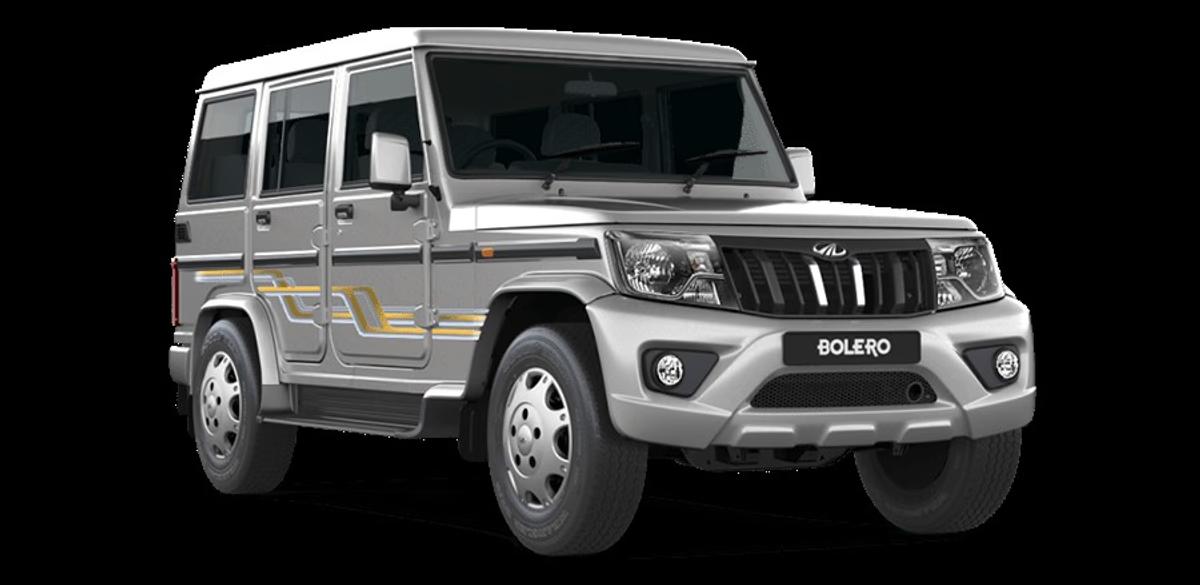
Over the past decade, SUVs have evolved considerably to the point that they now dominate every imaginable scene, including advertising and retail. Some SUVs, however, have a design focus on the rugged, utilitarian nature of the vehicle rather than on a fancy infotainment system and an upscale interior.
A great example of this is the Mahindra Bolero, which is built for hard, rough driving conditions rather than impressing with luxury features; thus, it is the exact opposite of every other polished, urban SUV marketed on functionality or convenience.
Design Philosophy: Form follows Function
There are several reasons that people continue to buy the Mahindra Bolero; however, the main reasons are largely based on design and intended use. Current-generation urban SUVs tend to emphasise aesthetics because they are designed and built for use in urban environments; i.e., urban SUVs are characterised by glossy finishes, elegant curves, and extremely comfortable interiors.
The Bolero’s got its own thing going on. It’s boxy, upright, and basic, and that’s intentional. Every element serves a purpose: better visibility, solid build, and easy fixes if something goes wrong. It’s not about fashion—it’s about function. Folks who want a vehicle that works hard and doesn't fuss over looks stick with the Bolero because it delivers exactly what they need.
Construction and Structural Approach
The Bolero stands apart from most modern urban SUVs in the way it’s built. Urban SUVs usually have a monocoque frame, which means the body and chassis are fused into a single unit. That makes them lighter and gives you a comfortable, efficient ride on city streets.
The Bolero takes a different route. It sticks with body-on-frame construction, where the body sits atop a sturdy chassis. That old-school setup really shines when the roads get rough or when you’re hauling heavy loads. Sure, it’s not as smooth as a city-focused SUV, but if you spend a lot of time outside the city, this trade-off keeps the vehicle reliable and tough.
Ride Comfort Versus Load-Bearing Ability
Comfort is the priority for urban SUVs. Their suspension soaks up little bumps and keeps things smooth during your daily commute—perfect for paved roads and mild conditions.
The Bolero’s suspension isn’t aiming for plushness. Instead, it’s built to tackle unpredictable surfaces and carry extra weight. The ride does feel firmer, but that’s what keeps the Bolero stable and dependable when you’re loaded up or running through rural roads. For people who need a workhorse more than a lounge-on-wheels, that emphasis on load-bearing stability makes a lot of sense.
Interior Priorities and Feature Expectations
Modern urban SUVs really focus on digital displays, sleek materials, and tech connections — city drivers just expect to see big touchscreens, fancy ambient lighting, and smart infotainment built in. The Mahindra Bolero walks a different path. Its interior is straightforward: basic controls, tough materials, and easy-to-use layouts. It’s not flashy, but it makes sense for people who are after practicality. The seats and storage work well for all sorts of uses, whether you’re hauling stuff or just getting from A to B.
For folks who want their car as a reliable tool, not a plush retreat, this stripped-back approach actually works in their favour.
Performance Tuned for Predictability
When it comes to performance, urban SUVs go for variety — turbo-petrol engines, automatics, smooth acceleration. They’re set up for responsive, effortless drives in city traffic and put a premium on refinement.
Bolero isn’t chasing that. Its diesel engine is all about steady torque and solid efficiency, especially when the vehicle’s under a heavier load. The manual gearbox keeps things simple, and the performance stays consistent, even when conditions are tough.
That kind of reliability matters to buyers who care less about thrilling drives, and more about getting the job done without surprises.
Maintaining and Owning A Vehicle
Urban SUV technology tends to rely heavily on electronics and software, and therefore becomes more complex to maintain over time. In areas with better service networks, this is an acceptable problem, but in areas with limited access to these services, it can be more difficult to address.
Because of the Bolero's mechanically simple design, it's easier to maintain in areas without access to authorised service centres. Because there are fewer electronic dependencies, a Bolero generally has less downtime and is easier to repair, which can be critical for vehicle owners who depend on their SUVs as part of their daily lives.
Safety Technology Compared to Safety Assurance
In many urban areas, the use of advanced driver assistance systems (ADAS) has advanced rapidly in SUVs to improve vehicle safety in structured traffic situations. ADAS safety systems work best on roads with uniform road markings, disciplined road participants, and well-maintained infrastructure.
In contrast to urban SUVs, which provide the driver with a high level of electronic assistance, Bolero is designed to be structurally safe and have basic safety systems. Therefore, while the Bolero might not provide the same level of electronic assistance for the driver, it does have predictable operational characteristics when driven in a mixed or less structured environment.
How Buyers Compare These Differences Today
Buyers evaluating SUVs today are also utilising online research tools as part of their evaluation process to determine which vehicle best meets their needs. By utilising a website such as ACKO Drive which combines online car-buying with expert review and side-by-side comparison of vehicles, buyers will be able to easily distinguish the different types of vehicles available to them, from utility-type vehicles such as the Mahindra Bolero versus modern city-type SUVs and understand that neither type of vehicle is better than the other — rather they are simply better suited for different types of uses.
Conclusion
The Mahindra Bolero has a different overall design concept than modern city-type SUVs, and that difference runs through every phase of its construction, from design philosophy to construction materials and interior prioritisation/expectations for ownership. While city-type SUVs are designed with a focus on comfort, the latest technology, and a lifestyle-driven approach, the Mahindra Bolero has been designed with a focus on durability, simplicity, and consistent performance.
This design concept and overall design philosophy for the Mahindra Bolero are why it remains a relevant choice. As the SUV marketplace becomes increasingly segmented, there remains a segment of customers looking for a vehicle that is utilitarian, meets needs beyond urban miles, and values function over style. As a result, the Mahindra Bolero offers a vehicle option for these consumers that does not directly compete with modern city-type SUVs; rather, they coexist and provide a solution that continues to meet a demand that has not changed.