
New Delhi, Dec 16 (IANS) Researchers at the Institute of Nano Science and Technology (INST), Mohali, have identified a new pathway involving nanoparticles to treat Alzheimer’s Disease (AD), said the Ministry of Science & Technology on Tuesday.
Conventional Alzheimer’s therapies often target only a single pathological feature, such as amyloid aggregation or oxidative stress, yielding limited clinical benefit.
However, the new therapy involves nanoparticles that integrate polyphenol with antioxidant properties found in green tea, a neurotransmitter, and an amino acid.
It has the potential to treat Alzheimer’s Disease by changing the path of the progression of the disease, slowing it, improving memory, and supporting thinking skills, said the researchers in the paper, published in the journal Small.
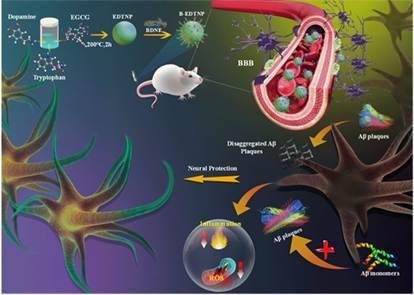
The therapy works by integrating epigallocatechin-3-gallate (EGCG) -- an antioxidant found in green tea --, dopamine -- a neurotransmitter important for mood -- and tryptophan -- an amino acid involved in many cellular functions -- into a nanoparticle called EGCG-dopamine-tryptophan nanoparticles (EDTNPs).
This enables it to simultaneously target amyloid aggregation, oxidative stress, inflammation, and neuronal degeneration -- four key pathological hallmarks of Alzheimer’s.
“Incorporation of Brain-Derived Neurotrophic Factor (BDNF) -- a protein crucial for the survival, growth, and function of neurons onto EDTNPs (B-EDTNPs) creates a dual-action nanoplatform that not only clears neurotoxic Amyloid Beta aggregates (protein clumps that disrupt neural function and drive Alzheimer’s disease pathology) but also enhances neuronal regeneration,” said the team led by Dr. Jiban Jyoti Panda from INST, an autonomous institute of the Department of Science and Technology (DST).
“This is a rare approach in Alzheimer’s therapeutics which uniquely combines antioxidant, anti-amyloid, and neurotrophic actions for the therapy,” they added.
The research, conducted with support from Dr. Ashok Kumar Datusalia (NIPER Raebareli) and Dr Nisha Singh (Gujarat Biotechnology University), involves the synthesis of EDTNPs using biocompatible assembly techniques like pressure-assisted hydrothermal and electrostatic-based co-incubation methods to combine antioxidant, neurotransmitter, and amino acid components.
These nanoparticles were then functionalised with BDNF, producing B-EDTNPs with enhanced neuroprotective potential.
In lab experiments and mouse models, these nanoparticles disassembled toxic plaques, reduced inflammation, restored balance inside brain cells, and even improved memory and learning. Computer simulations further confirmed that the nanoparticles latch onto harmful Amyloid beta fibrils and pull them apart at the molecular level.
“The research could help people with Alzheimer’s disease by offering a treatment that works on multiple levels. The nanoparticles not only remove harmful protein plaques but also reduce brain stress, inflammation, and help nerve cells grow through BDNF,” said the researchers.
--IANS
rvt/