
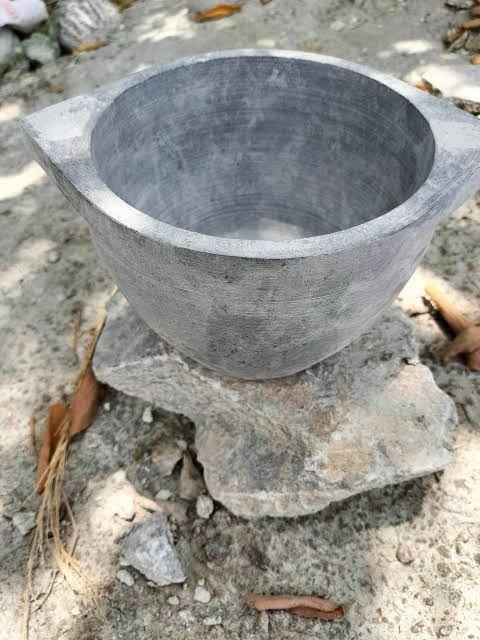
Namakkal, Dec 13 (IANS) The traditional soapstone artisans of Tamil Nadu's Namakkal region are facing an uncertain future despite their iconic cookware, Namakkal Makkal Pattirangal, recently receiving the Geographical Indication (GI) tag.
While the recognition has boosted visibility and market demand for the centuries-old craft, artisans say it has done little to address their most pressing challenge -- the steady depletion of high-quality soapstone, which is essential for their livelihood.
For generations, families in and around Namakkal have carved kalchattis and other cookware from a distinctive magnesium-rich, velvet-smooth soapstone known for its superior heat retention, slow fermentation properties, and ability to preserve nutrients.
The stone is traditionally sourced from Namakkal district and neighbouring areas such as Mangalapuram, Periyasoragai, Aranganur, and select locations in Salem district. However, artisans say easily accessible deposits have largely been exhausted. Most remaining reserves are now found deep underground or lie within restricted zones, including forest areas where quarrying is prohibited.
Extracting stone from deeper layers requires mechanised methods, but obtaining permission for such extraction has become increasingly difficult. As a result, artisans fear that reduced access to raw materials could severely hamper production, just as the GI tag has renewed interest in their products.
The craft itself remains confined to small, family-run units operating out of modest workshops in rural pockets close to quarrying zones. Despite growing popularity, there has been little expansion in scale or workforce, largely because the specialised skills are passed down within families and depend heavily on uninterrupted access to suitable stone.
Stakeholders involved in securing the GI tag say the craft's survival over centuries sets it apart from many other traditional handicrafts that have faded away.
Government agencies have begun promoting soapstone cookware through exhibitions and workshops, and demand from large retail outlets has risen. However, without assured and regulated access to raw materials, artisans say they are unable to scale up production or take advantage of new market opportunities.
Forest officials maintain that extraction permissions are governed strictly by existing laws. While limited extraction may be examined in non-restricted areas if land classifications permit, quarrying within reserved forest zones remains prohibited.
As demand for traditional and sustainable cookware grows, Namakkal's soapstone artisans warn that recognition alone is not enough. Without a clear policy to ensure sustainable and lawful access to raw materials, the future of this GI-tagged heritage craft remains at risk.
--IANS
aal/sd/