
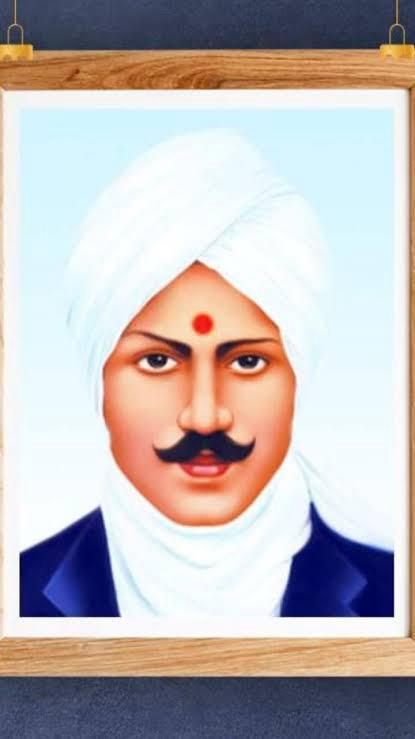
New Delhi, Dec 11 (IANS) Prime Minister Narendra Modi on Thursday paid tribute to Mahakavi Subramania Bharati on his birth anniversary, saying that his verses ignited courage and his thoughts had the power to leave a lasting impression on the minds of people.
PM Modi took to the social media platform X and said, “Tributes to Mahakavi Subramania Bharati on his birth anniversary. His verses ignited courage and his thoughts had the power to leave a lasting impression on the minds of countless people."
“He illuminated India’s cultural and national consciousness. He worked towards creating a society that is just and inclusive. His contributions to enriching Tamil literature also remain unparalleled,” he added in his post.
Subramania Bharati left an indelible mark across a wide range of subjects, reflecting his multi-dimensional personality. A symbol of the multilingual spirit that characterises India, Bharati knew 32 languages, including three foreign languages. While he composed brilliant poems and essays in English, he took immense pride in being a Tamil poet and journalist. He believed Tamil and all other Indian languages were in no way inferior to English.
Bharati wanted Indians to take pride in their rich heritage, of which language and literature were essential components. Although he took great pride in being a Tamil scholar and poet, he also showed deep respect for other languages. For example, he described Telugu as “Sundara Telugu”. He urged people to take pride in being Bharatiyas, belonging to a land blessed with ancient wisdom -- a land which, in his famous words, is “The glorious symbol (tilak) of the world, the Land of Bharat.”
He was a visionary of freedom in the broadest sense. He not only joined the freedom struggle and relentlessly fought against foreign rulers, but also envisioned an India free from hunger, gender discrimination, untouchability, environmental uncleanliness, and narrow linguistic and religious dogmatism. This far-sighted approach continues to make him relevant even today.
Bharati strongly advocated the eradication of the caste system. He believed all living beings were equal, and to demonstrate this conviction, he performed the upanayanam for a young Dalit man and declared him a Brahmin. In one of his poems, he wrote: “There is no caste system. It is a sin to divide people on a caste basis, which means a well-educated person knows to treat them alike and not by their caste.”
Although he opposed colonial rule and the subjugation of Indians by the British, Bharati was not against all foreigners. He respected those who loved and honoured Bharat and its culture. One such example is Margaret E. Noble, an Irish woman renamed Sister Nivedita by Swami Vivekananda. She founded a girls’ school in Calcutta, educating her students with a spirit of nationalism. She also introduced the singing of Vande Mataram in her school as a prayer.
Bharati was a staunch advocate of women’s rights and their participation in politics. He championed greater rights and education for women. In his view, consistent with ancient Indian thought, women should be at the forefront of societal transformation.
--IANS
jk/dpb