
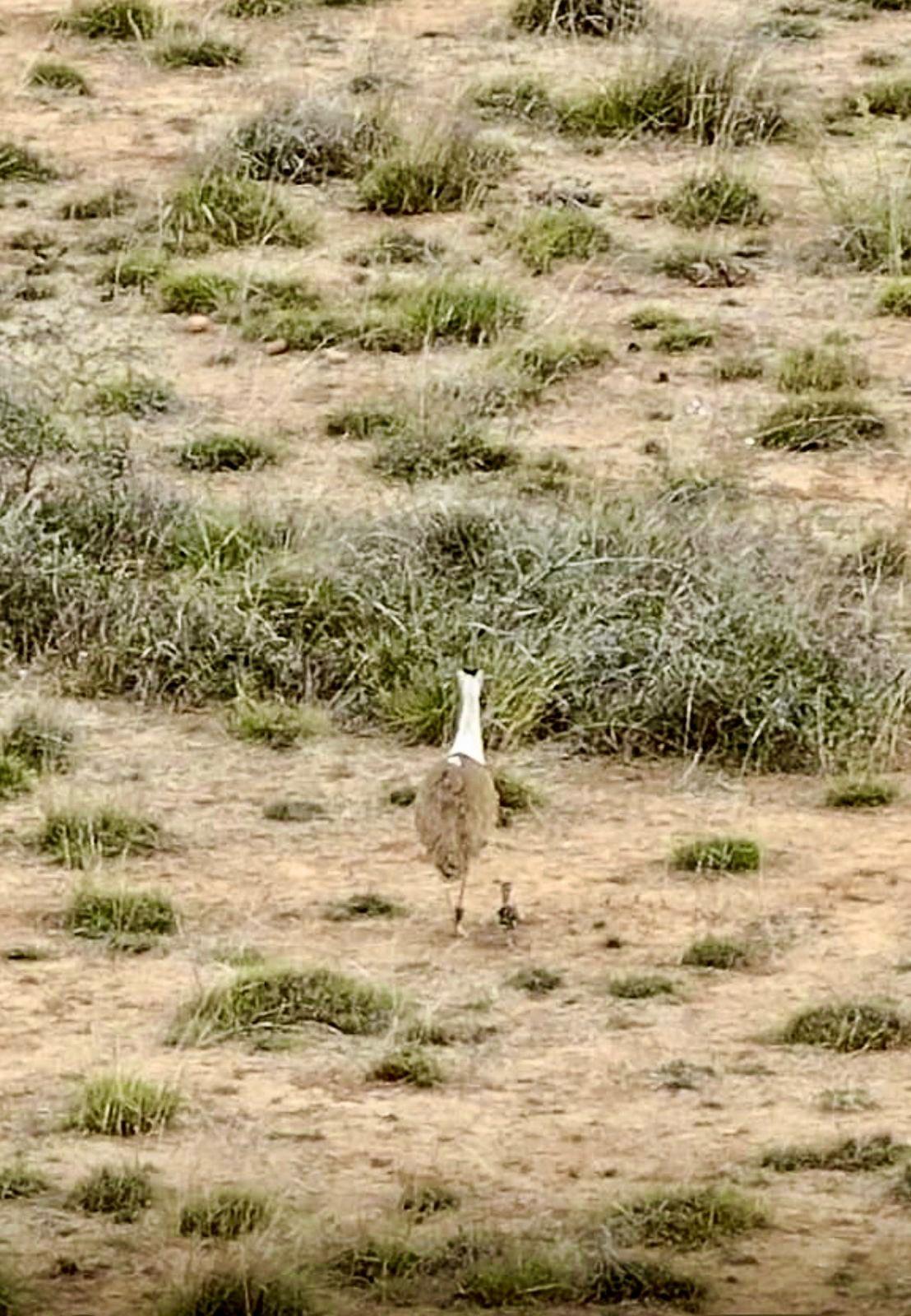
Bhuj, March 28 (IANS) After a decade-long gap, a chick of the critically endangered Great Indian Bustard (GIB) has hatched in Kutch, marking a significant achievement in wildlife conservation for Gujarat.
The birth, in the Abdasa region, follows a carefully executed operation to introduce a fertile egg from a Rajasthan breeding centre into the Kutch population.
State Forest and Environment Minister Arjun Modhwadia said the achievement is “a moment of pride for all of us” and credited the joint efforts of the Gujarat and Rajasthan Forest Departments, the Ministry of Environment, Forest and Climate Change, and the Wildlife Institute of India (WII) for the success.
The initiative, known as ‘Operation Egg Transfer’, involved transporting a fertile egg from Rajasthan over 19 hours by road in a portable incubator to ensure its safe arrival in Kutch.
On March 22, the egg was carefully placed in the nest of a female bustard, replacing an infertile one.
The female naturally incubated the egg, resulting in the hatching of a healthy chick on March 26.
Modhwadia highlighted that the achievement was made possible through the application of an advanced conservation technique called the Jumpstart Approach.
"Under the leadership of Chief Minister Bhupendra Patel and Deputy Chief Minister Harsh Sanghavi, the Gujarat Forest Department has achieved an unprecedented milestone in wildlife conservation," he noted.
The Minister also praised the officers of the Wildlife Division for their dedication and congratulated all those involved in making the mission successful.
Union Forest and Environment Minister Bhupendra Yadav conveyed his congratulations, commending the collaborative efforts of the Environment Ministry, the Gujarat and Rajasthan forest departments, and the WII.
The birth is part of 'Project GIB', launched in 2016 following a vision set by the then Chief Minister of Gujarat and current Prime Minister Narendra Modi to conserve the natural habitats of the Great Indian Bustard.
Breeding centres at Sam and Ramdevra in Rajasthan have now collectively increased the bird population to 73.
Modhwadia said that ongoing field monitoring is being conducted to observe the female bustard and her chick.
He added that this achievement strengthens India’s commitment to wildlife conservation and is a source of pride for scientists, forest officers, and wildlife enthusiasts alike.
--IANS
mys/uk