
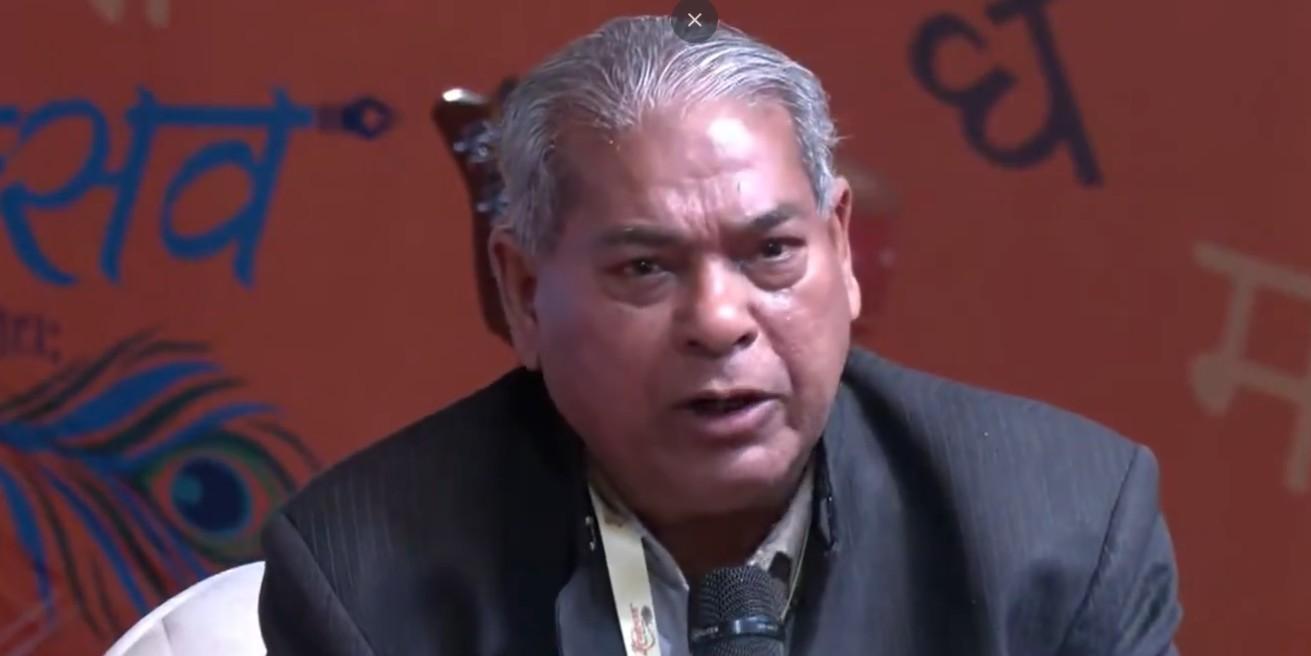
New Delhi, Jan 3 (IANS) Former Archaeological Survey of India (ASI) regional director Dharamveer Sharma on Saturday claimed that the capital’s iconic structure, Qutub Minar, was a “Vedhshala” (an ancient observatory to study Astronomy) in reality and also presented cogent arguments to corroborate his claims.
Speaking at the Shabdotsav 2026 event, the Ex-ASI director said, "I have called Qutub Minar a VedhShala. There is a reason for this. Whenever a monument, temple, or building is constructed, there is a plan and purpose. For a circular structure like this, its foundation should have been circular, but its foundation is actually oblong."
Sharing his past experiences, he said that he worked for years on the monument and discovered many unknown facts related to the structure, which are not even documented or spoken about.
“Any structure or building is created with a vision; its purpose is reflected in its foundation. Its foundation was dug in 1954. As it is a circular structure, its foundation should have been circular, but that is not the case. It is oblong, i.e. rectangular in shape – with one of its bases measuring 62 feet in length and 52 feet in breadth,” he explained.
Sharing another argument in support of his claims, he said, “Qutub Minar is slanted 25 feet towards the South; there was an inherent reason behind this tilt. For any such slanted structure to survive, this has to have a strong and sturdy cantilever support, for which the founders did make a provision in the structure.”
Further breaking down the science behind the building, he said that on 21st June, the longest day of the year, the sun comes in Dakshinayan and the shadow of Qutub Minar doesn’t fall on the ground for half an hour.
“All this is an undeniable proof that this was Vedhshala in its original form,” he said, thereby giving strength to the widely held belief that it was ravaged by the invading rulers, who changed its character and purpose.
Qutub Minar has been mired in controversy earlier also, with claims by Hindu outfits that the ‘Vishnu Stambh’ and temples were ruined to erect this structure, while the official records identify it as a minaret and relic of the Mughal era.
The articulate arguments by the former ASI director are set to fuel further controversy, inviting charged reactions from various quarters.
Acharya Mithilesh Nandini Sharan - the head of Hanuman Niwas Peeth in Ayodhya Dham, responding to the ‘revelations’ said, "This is an issue that dates back decades. He has not raised it as a political issue; he is the author and has worked on it himself. He has served as an officer and has conducted archaeological research. He shared some findings from that research."
--IANS
mr/dan