
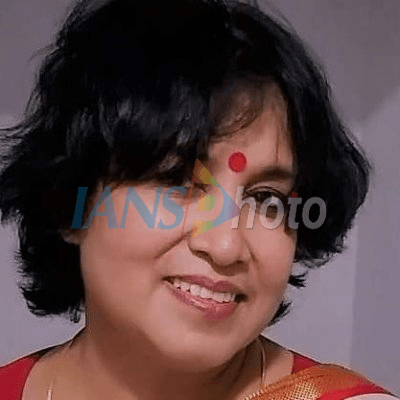
New Delhi, Jan 5 (IANS) Bangladesh’s exiled author Taslima Nasreen finds the current situation in her country of birth worsening through time, even compared to the day she was forced to leave over three decades ago.
“I’d say that was the time of the beginning of the growth of religious fundamentalism in the country; now, Bangladesh is full of such elements,” said Taslima in an exclusive interview with IANS.
“The then administration played into the hands of fundamentalists, and I was penalised without reason. The silent acquiescence to their unjustified demand strengthened the hands of bigots, and what you see today is the culmination of such official nods that have led to widespread religious intolerance,” stated the author.
She also highlighted the clash between free expression and religious fundamentalism, where she is projected as a symbol of secular resistance, advocating women’s rights and freedom of thought despite decades of exile.
Taslima studied medicine to become a doctor, but her love for literature made her pick up the pen to compose novels and poetry. She was forced into exile from Bangladesh in 1994 after her novel Lajja (Shame) provoked outrage among Islamist groups who accused her of “hurting religious sentiments”.
Lajja, published in 1993, depicted the persecution of Hindus in Bangladesh after the Babri Masjid demolition in India. The novel was banned by the government for allegedly inciting communal disharmony. She faced death threats, violent protests, and an arrest warrant.
Fearing the unrest to snowball, the then Prime Minister Khaleda Zia’s government expelled her. Since then, she has lived in exile – first in Sweden, later in India – where she continues to write and advocate for secularism, feminism, and freedom of expression.
She holds Swedish citizenship but resides in India on renewable permits.
In India, she first attempted to stay in Kolkata, but in 2007, violent protests forced her to leave West Bengal, too. After a brief period of uncertainty, she has lived in Delhi since, under government protection.
On several occasions, she has acknowledged the role of the government of India in allowing her to remain in a country where she can freely express herself and follow a life resembling, to some extent, those from the past.
Despite the challenges, her works have been translated into many languages and continue to resonate with readers worldwide.
In Bangladesh, she claimed successive governments have been silently watching the rise of fundamentalist elements, giving radicalism an open field to spread.
“When I was forced to leave Bangladesh, it had indicated what lay ahead for the country,” she reflected. This, she claimed, was followed by successive administrations using religion as a tool to consolidate power.
Even madrasa education was accepted as equivalent to a university degree, she said.
“All such policies and decisions have led to this situation. The country is reaping what the political leaders have been sowing through these times,” added Taslima.
What, according to her, is the future for Bangladesh and its people? “I would say that those who support and believe in ‘muktiyddha’ (Bangladesh 1971 liberation war) should come to power in Bangladesh in the coming (February 12) general election,” she replied.
“Unfortunately, those in Bangladesh peddling religious fundamentalism know that such bigotry is not in the nation’s well-being; yet, they do it for their own selfish interest,” Taslima said.
“Even though the previous administration too had indulged in religious appeasement and supported communal forces, Sheikh Hasina was overthrown also because the fundamentalists did not want a woman to rule over such a long period of time,” she added.
Taslima wants dynasty politics to end in Bangladesh, implying that family bonds make politicians think of an heir apparent rather than the country.
However, she added, “I find people talking about a possible win for the Bangladesh Nationalist Party (BNP). The party is supportive of ‘muktiyddha’, so if they can work for the progress of the country, freedom of speech, and women’s equality, I think they may be able to deliver.”
Taslima is also hopeful of the BNP leader and the deceased Khaleda Zia’s son, Tarique Rahman, who recently returned to Dhaka after a 17-year exile in the United Kingdom.
“His long association with Western culture may have imbued him with progressive thoughts, so he may work for a better Bangladesh. But if he continues to tread the path of his predecessors, I don’t see much hope in the future,” she opined.
Will she ever be able to return? Taslima Nasreen did not even hazard a guess.
--IANS
jb/dan