New Delhi, Dec 17 (IANS) The Lok Sabha witnessed sharp criticism from opposition members during discussions on the Viksit Bharat – Guarantee for Rozgar and Ajeevika Mission (Gramin) (VB-G RAM G) Bill, 2025, which seeks to repeal the Mahatma Gandhi National Rural Employment Guarantee Act (MGNREGA), 2005, and introduce a new rural employment framework guaranteeing 125 days of wage work annually - up from 100 days.
Introduced by Union Agriculture and Farmers Welfare Minister Shivraj Singh Chouhan on December 16 amid protests, the Bill aligns with the “Viksit Bharat @2047 vision,” focusing on thematic infrastructure like water security, rural connectivity, and climate resilience, with enhanced digital monitoring and convergence of schemes.
DMK MP K Kanimozhi strongly opposed the Bill's nomenclature, stating that reading its name "vexes" her.
"This is nothing but an imposition of Hindi on non-Hindi speaking states. Time and again, the Central government finds ways to impose Hindi or Sanskrit on regional states," she said, highlighting concerns over cultural and linguistic federalism.
Trinamool Congress MP Mahua Moitra echoed the sentiment, accusing the government of communalising the scheme by invoking Lord Ram's name.
"Why change the name? It does not make sense. They are communalising it by bringing in the name of Lord Ram," she remarked, adding, "This is not for Ram or Rahim."
Moitra also demanded the release of pending MGNREGA funds for West Bengal, alleging the Centre is now "repealing the Bill altogether" after withholding dues.
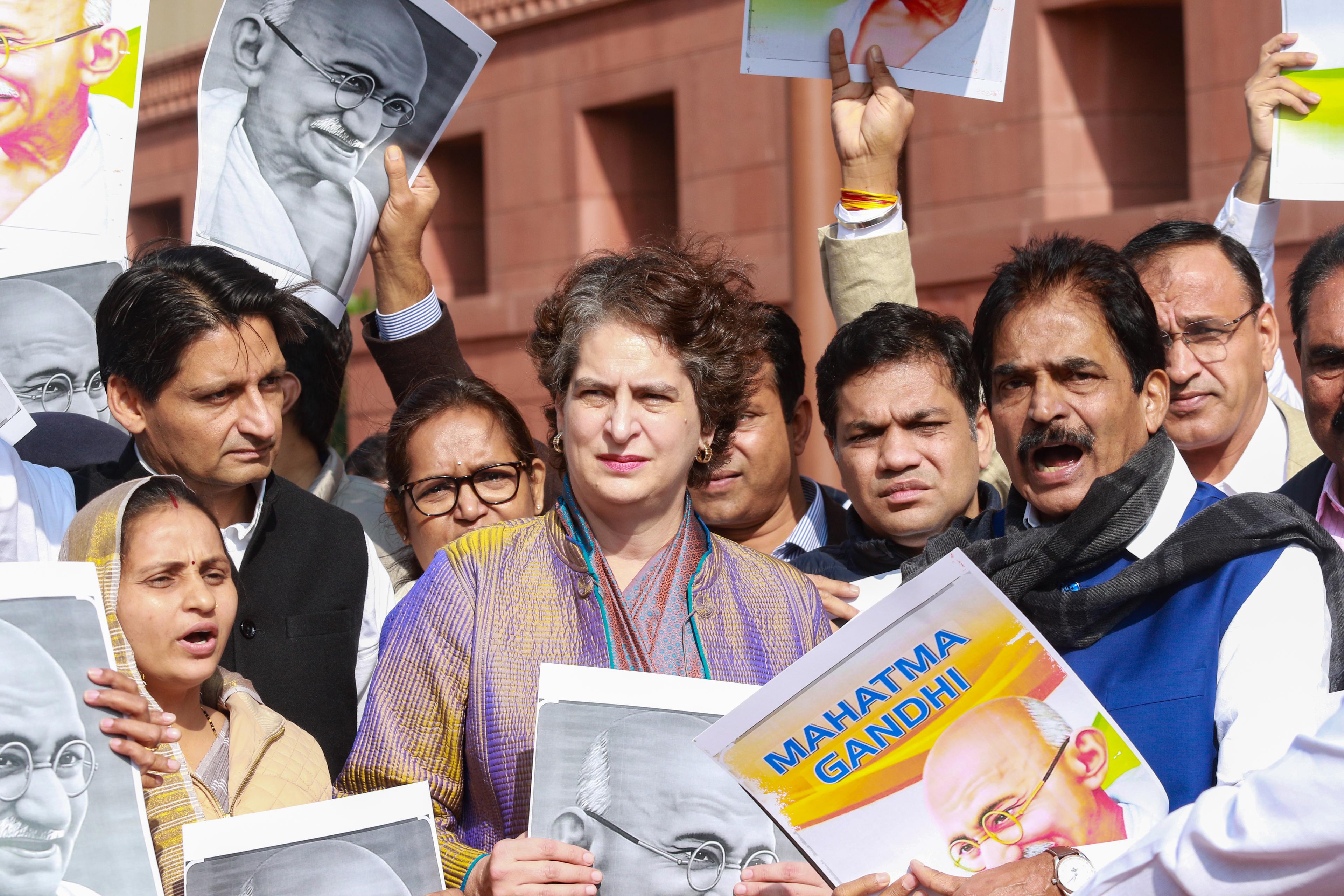
Praising MGNREGA's role since 2005 in creating widespread rural employment, opposition members, including Congress leaders like Priyanka Gandhi, protested the removal of Mahatma Gandhi's name, terming it an "insult" to the Father of the Nation and calling for nationwide agitations.
In contrast, TDP MP Lavu Sri Krishna Devarayalu supported the Bill as "just another iteration" of pre-2005 schemes like Jawahar Rozgar Yojana.
"It's essentially the same with some changes," he said, welcoming the increase to 125 days as a positive step.
The Bill introduces changes like 60:40 Centre-State funding (90:10 for Northeast/Himalayan states), seasonal pauses during peak agriculture, and normative allocations.
While the government defends it as modernising rural livelihoods, opponents fear dilution of rights-based guarantees and added burden on states.