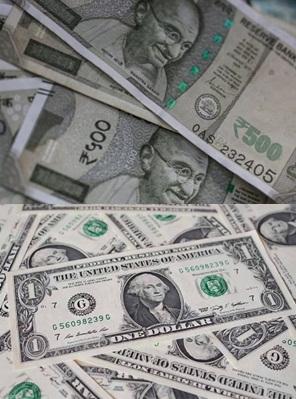
New Delhi, Dec 17 (IANS) Geopolitical uncertainties driven by the delay in the India-US trade deal have been the single-most important reasons for the rupee sliding against the US dollar, an SBI Research report said on Wednesday, adding that the rupee is likely to bounce back strongly in the second half of the next fiscal.
India’s trade data shows the remarkable resilience in navigating through prolonged uncertainty, more protectionism and labour supply shocks.
“While the geopolitical risk index has moderated since April 2025, the current average value of the index for April-October 2025 is much greater than its decadal average, which indicates how much pressure global uncertainties are exerting on INR," State Bank of India's (SBI) Group Chief Economic Advisor, Dr Soumya Kanti Ghosh, said.
Dr Ghosh further stated that consistent with their empirical analysis, "the rupee is currently in a depreciating regime and is likely to exit it".
After breaching the psychologically important mark of 90 per US dollar, the rupee crossed the 91-level on Tuesday.
However, the rupee staged a sharp recovery on Wednesday, trading as strong as 90.25 during the day, as the cooling of crude prices also contributed to improved sentiment.
According to the SBI report, the data also indicates that the current fall is the quickest (in terms of number of days) of the rupee, scaled to 5 per USD. In less than a year, the rupee has slid from 85 to 90 per dollar.
The current slide appears to be primarily driven by FPI outflows, chiefly equities (after two years of robust inflows) and uncertainty regarding the US-India trade deal.
Since April 2, 2025, when the US announced sweeping tariff hikes across economies, the Indian rupee (INR) has depreciated by 5.7 per cent against USD (most amongst the major economies), notwithstanding sporadic phases of appreciation owing to optimism over the US-India trade deal.
"While INR is the most depreciated currency, it is not the most volatile. This clearly indicates that the 50 per cent tariff imposed on India is one of the major factors behind the current phase of rupee depreciation," the SBI report noted.