
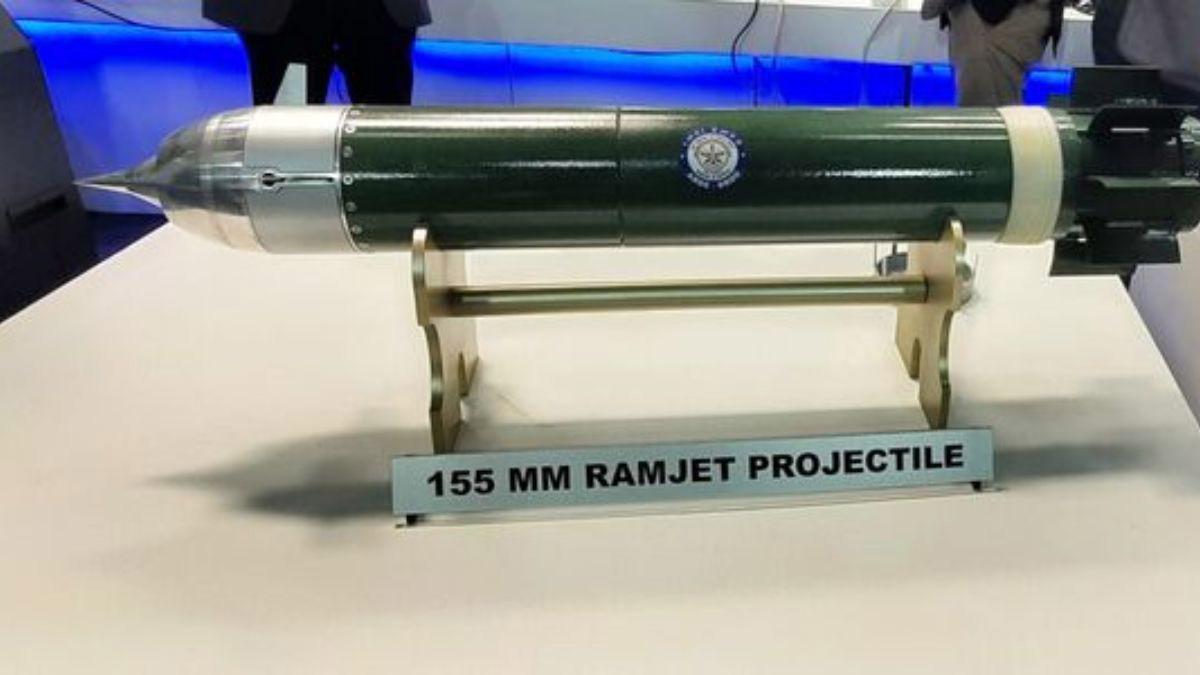
New Delhi, Jan 3 (IANS) In a landmark stride toward military self-reliance, the Indian Army is set to become the world’s first armed force to operationally deploy ramjet-powered artillery shells for its 155 mm guns.
This initiative, part of India’s broader Atmanirbharta (self-reliance) campaign, is being developed in collaboration with the Indian Institute of Technology (IIT) Madras.
The innovation promises to extend the range of conventional artillery shells by 30 to 50 per cent while maintaining their destructive power, marking a significant leap in battlefield capabilities. Artillery modernisation has long been a priority for the Indian Army.
The focus has been on enhancing the range and accuracy of rockets and munitions to meet the demands of modern warfare. Conventional artillery shells, while lethal, are limited in range and precision compared to advanced missile systems.
By integrating ramjet technology into 155 mm shells, the Army aims to bridge this gap, giving its artillery units the ability to strike deeper targets with greater effectiveness. Ramjet propulsion is not new, having been successfully used in missiles for decades. However, applying it to artillery shells is a novel concept.
A ramjet is an air-breathing engine that requires no compressor or turbine. Instead, it relies on the forward motion of the projectile to compress incoming air. Once the shell reaches speeds of around Mach 2, or twice the speed of sound, the ramjet becomes operational. Fuel is then burned in the compressed air, producing thrust that sustains and extends the shell’s flight.
The project is being spearheaded by IIT Madras in partnership with the Army Technology Board (ATB). Developmental trials are currently underway, with successful tests already conducted at the Pokharan field firing ranges in Rajasthan.
These trials have demonstrated the feasibility of retrofitting ramjet modules onto existing 155 mm shells, meaning the technology can be applied across the Army’s current inventory without requiring entirely new ammunition designs.
Once the technology is fully developed, it can be adapted for use in any of the Army’s artillery systems, including the M777 ultra-light howitzer. This flexibility ensures that the innovation will not be restricted to a single platform but will enhance the overall artillery capability of the force. The
The Indian Army has artillery guns using shells of different calibres, including light artillery (up to 105 mm), which is primarily used for close support of ground troops, medium artillery (106–155 mm) typically deployed for bombardment and suppression of enemy positions, and heavy artillery (above 155 mm) designed for striking rear installations and strategic targets.
The ramjet-powered shell falls within the medium artillery category but offers performance that rivals heavier systems, thanks to its extended range. This means the Army can achieve long-distance strikes without deploying bulkier, less mobile heavy artillery.
Thus, the introduction of ramjet-powered artillery shells enhances the Army’s ability to conduct deep strikes, disrupt enemy logistics, and neutralise fortified positions from safer distances.
It also reduces reliance on expensive missile systems for medium-range engagements, offering a cost-effective yet powerful alternative. The development underscores India’s commitment to indigenous defence technologies.
By collaborating with IIT Madras, the Army is not only advancing its own capabilities but also fostering innovation within the country’s academic and research institutions. This synergy between the military and academia is a cornerstone of the Atmanirbharta initiative, aimed at reducing dependence on foreign suppliers and building a robust domestic defence industry.
While the technology is still undergoing trials, its potential applications are vast. Once perfected, ramjet-assisted shells could be integrated into multiple artillery platforms, significantly boosting India’s firepower.
The modular nature of the design means that existing stockpiles of 155 mm shells can be upgraded rather than replaced, ensuring cost efficiency and rapid deployment. The success of this project could also pave the way for further innovations in artillery propulsion.
Concepts such as scramjet-assisted shells or hybrid propulsion systems may become feasible in the future, pushing the boundaries of what artillery can achieve.
--IANS
jb/dan