
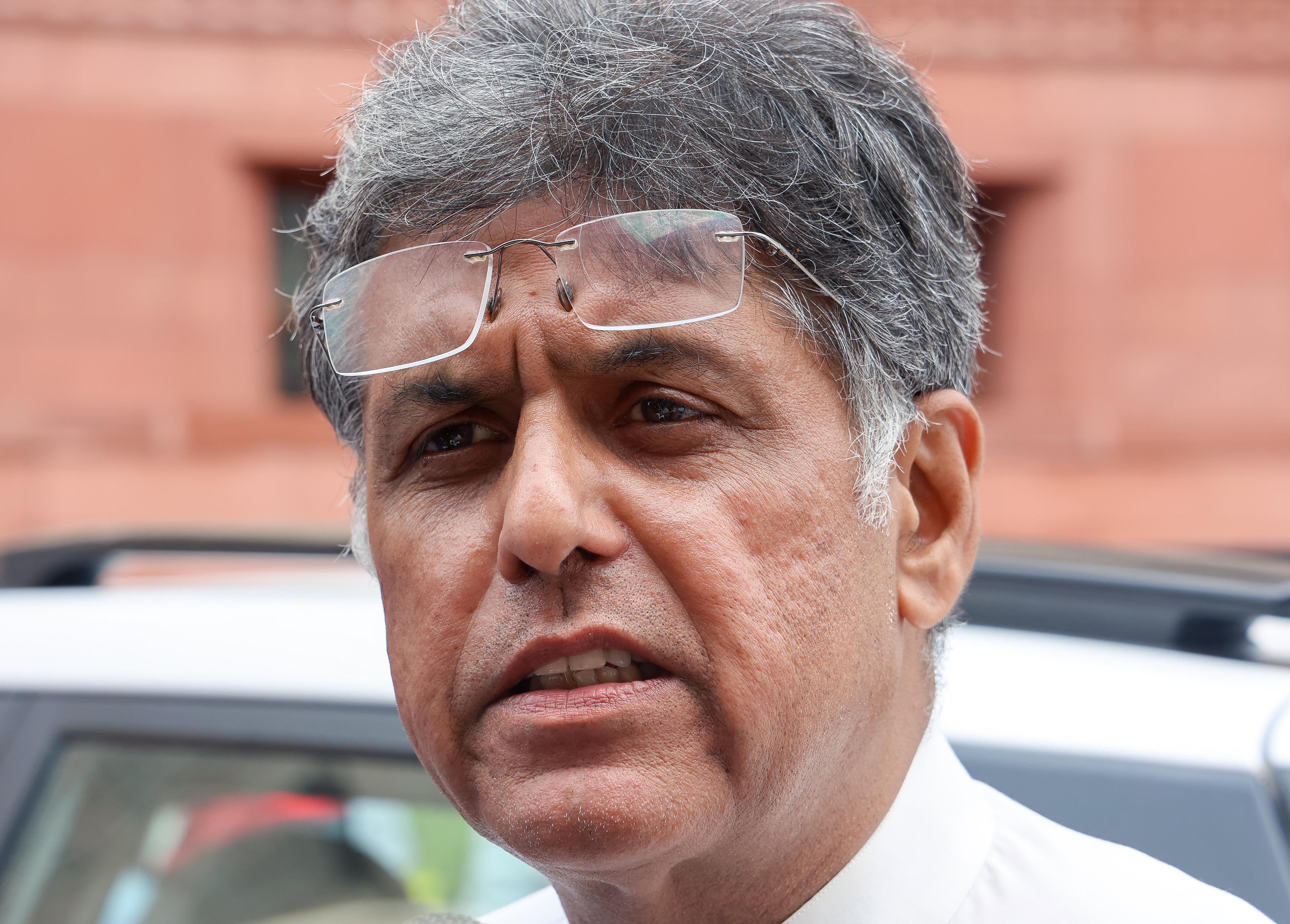
New Delhi, March 23 (IANS) Congress MP Manish Tewari on Monday raised concerns over supply disruptions caused by the ongoing conflict in West Asia and stressed the need to give diplomacy a chance. He said the war has entered a very critical and dangerous phase, urging all sides to de-escalate tensions.
Speaking to the media, Tewari highlighted the challenges facing energy-consuming nations, pointing to the wider implications of disruptions in the supply chain of crude oil, natural gas, fertilisers, food, and pharmaceuticals.
“The war in West Asia has entered a very critical phase. There has been an unprecedented escalation since yesterday. The Iranians have reportedly attempted to target an Israeli nuclear research reactor. The President of the United States has issued a warning that is set to expire this evening,” he said.
“So, the conflict has entered what is probably its most dangerous phase. Around 3,000 ships are currently idling in the Gulf of Oman and the Persian Gulf. There is a need for everyone to dial down tensions and give diplomacy a chance. The situation is becoming more dire with every passing moment, particularly for energy-consuming nations, as it is not only about crude oil and natural gas, but also fertilisers, food, pharmaceuticals, and essential life-saving drugs. The entire supply chain has been disrupted. After three weeks of hostilities between Iran, the US, and Israel, we have entered a highly sensitive phase in this conflict,” he added.
Earlier in the day, Prime Minister Narendra Modi stated that India is facing significant challenges due to the ongoing conflict in West Asia, highlighting the impact on Indians living in Gulf nations as well as the trade and economic consequences of the crisis.
Speaking in the Lok Sabha about the ongoing West Asia conflict, PM Modi said, "The current situation in West Asia is worrisome. In the last few days, EAM Jaishankar and Union Minister Hardeep Singh Puri briefed the House about the issue. Now, this crisis has escalated beyond three weeks. Its adverse impact is being felt on the global economy and on people's lives. Therefore, the entire world is urging all parties to find an early solution to this crisis."
The Prime Minister also outlined the multifaceted challenges India faces due to the tensions in the Gulf nations.
"This conflict has also created unforeseen challenges for India. These challenges are economic, related to national security, and humanitarian. India has extensive trade relations with the countries at war and those affected by it," he said.
Meanwhile, Prime Minister Modi chaired a meeting of the Cabinet Committee on Security (CCS) in New Delhi on Sunday to review the situation and discuss mitigation measures in light of the ongoing conflict involving the United States, Israel, and Iran. During the meeting, Cabinet Secretary T.V. Somanathan made a detailed presentation on the steps taken by various ministries and outlined further preparedness measures.
In an official release, the Prime Minister’s Office (PMO) said that the ongoing conflict is likely to have significant short, medium, and long-term impacts on the global economy. The meeting assessed its potential effects on India and discussed possible countermeasures.
“Detailed assessments of the availability of critical resources for the common man, including food, energy, and fuel security, were carried out. Short-term, medium-term, and long-term measures to ensure the continued availability of essential commodities were discussed in detail,” the PMO statement said.
--IANS
jk/rad